
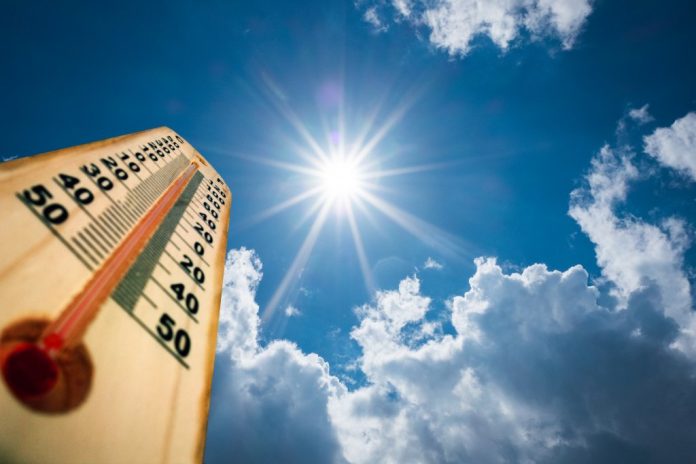
The National Weather Service said Virginia is expected to face a prolonged heat wave from Wednesday through Sunday, with the worst conditions likely from Thursday through Saturday. Temperatures across much of the state are expected to climb into the upper 90s and low 100s, combined with heavy humidity.
“As Virginia expects record-breaking high temperatures leading up to and throughout the holiday weekend, the safety of all our neighbors is my highest priority,” Spanberger said in a statement Wednesday morning. “I am asking Virginians to do all you can to keep yourself and your loved ones safe. Stay hydrated, stay cool, and check on your neighbors.”
State officials urged residents to avoid strenuous outdoor activities during the hottest hours of the day, drink water regularly and spend time in air-conditioned spaces whenever possible.
Officials also warned residents to never leave children or pets inside vehicles, where temperatures can rise rapidly even within minutes.
Virginians seeking relief from the heat can use the Virginia Department of Health’s online cooling center locator to find nearby public facilities.
The heat wave arrives as large parts of Virginia are already dealing with worsening drought conditions and declining river levels after months of unusually dry weather.
Beginning Wednesday, Richmond and neighboring localities including Chesterfield, Goochland, Hanover, Henrico and Powhatan counties implemented voluntary water-conservation measures tied to falling flows along the James River basin.
Under the region’s James River Regional Flow Management Plan, voluntary conservation measures begin when average river flows fall to 1,700 cubic feet per second for 14 straight days.
Regional officials asked residents to voluntarily reduce lawn watering and other non-essential water use while utilities continue to monitor river conditions.
Odd-numbered addresses are asked to water lawns only on Tuesdays, Thursdays and Saturdays, while even-numbered addresses are asked to water on Wednesdays, Fridays and Sundays.
Richmond officials said regional water systems remain capable of meeting drinking water and emergency needs, but warned that continued dry weather west of the city has reduced river flows throughout the watershed.
Local officials emphasized that the current conservation measures remain voluntary.
The dry conditions extend well beyond Central Virginia.
Last month, Spanberger and the Virginia Drought Monitoring Task Force urged Virginians across the state to voluntarily conserve water, warning Virginia was experiencing its driest stretch since 1941. State officials said precipitation totals were running about eight inches below average across much of the commonwealth.
Other localities have also warned residents about worsening drought conditions and the possibility of future restrictions.
Officials in New Kent County recently cautioned that prolonged heat and dry weather can place additional strain on water systems and could eventually require stronger conservation measures if conditions continue deteriorating.
The combination of prolonged heat and drought has heightened concerns about public health, agriculture and wildfire risks heading into one of the busiest travel weekends of the summer.
Virginia has experienced several major droughts and heat waves over the past century.
The drought of 1930 devastated farms across Virginia during the Dust Bowl era and caused agricultural losses later estimated at nearly $1 billion in today’s dollars.
Six years later, Richmond recorded 103 degrees on June 30, 1936 — still among the hottest temperatures ever officially documented in the city.
Virginia also endured severe heat and drought during the summer of 1980, when a nationwide heat wave contributed to widespread crop damage and thousands of heat-related deaths across the country.
Another major heat wave struck Virginia in 2024, when heat index values exceeded 105 degrees in parts of Central Virginia and promoted widespread heat warnings.
Federal climate experts have warned that extreme heat events are expected to become more frequent and intense as average temperatures continue rising.
State health officials this week encouraged residents to wear lightweight clothing, use sunscreen, avoid heavy outdoor exertion during peak afternoon heat and regularly check on elderly neighbors and vulnerable family members.
Officials also urged Virginians to monitor local weather forecasts and use the Center for Disease Control and Prevention’s HeatRisk tool to track heat dangers by zip code.