
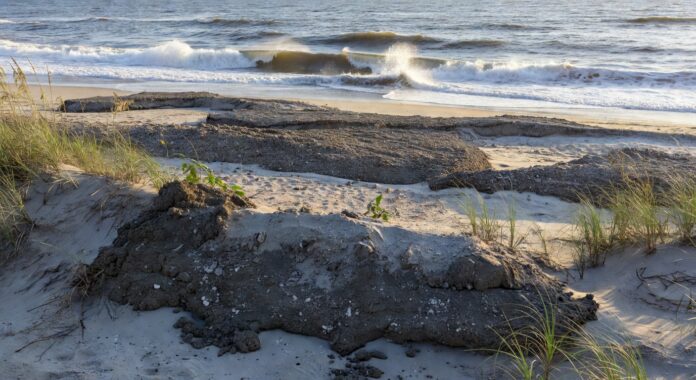
RICHMOND, Va. – The Virginia House of Delegates delivered overwhelming support for House Bill 52, passing the measure on a unanimous block vote of 98-0 on February 3, 2026. Sponsored by Delegate Robert Bloxom Jr. of the 100th District on the Eastern Shore, the legislation establishes a statewide policy to promote the beneficial reuse of dredged material from the Chesapeake Bay and its tributaries, effective December 1, 2027.
Dredging is essential for maintaining navigable channels that support Virginia’s vital maritime economy, including commercial shipping, fishing industries, and military operations. The bill defines ‘beneficial use’ to encompass practical applications such as beach nourishment, creation or restoration of wetlands and islands, habitat enhancement, and construction materials for coastal resilience projects. These uses transform what would otherwise be waste into valuable resources that protect shorelines, bolster property values, and foster economic activity in vulnerable coastal communities.
The Marine Resources Commission will be required to prioritize beneficial use of dredged material unless it proves unsuitable based on criteria the agency develops. Additionally, the bill directs the Secretary of Natural and Historic Resources to give priority consideration to project sites aligned with beneficial reuse for disposal of suitable material. To ensure smooth implementation, the Commission must convene a work group to craft necessary regulations and guidance.
HB52 emerged as a key recommendation from the Joint Subcommittee on Recurrent Flooding, addressing long-standing challenges in Virginia’s coastal areas where rising seas and storm surges threaten homes, businesses, and infrastructure. By mandating smarter management of dredged sediments, the measure supports proactive defenses against erosion and flooding without imposing broad new mandates or significant taxpayer burdens.
The bill’s journey through the House showcased broad consensus. Prefiled on December 29, 2025, it was referred to the Agriculture, Chesapeake and Natural Resources Committee. The Chesapeake Subcommittee recommended reporting with amendments on a 10-0 vote on January 26, 2026, followed by the full committee’s 22-0 approval on January 28. Amendments from the committee were agreed to during engrossment on February 2.
In the Senate, referred on February 4, 2026, the Agriculture, Conservation and Natural Resources Committee reported it favorably on February 24 with a 13-0 vote, rereferring it to Finance and Appropriations. As of early March, the bill remains under consideration, positioning it for potential swift passage given its unanimous backing.
Fiscal analyses from the Department of Planning and Budget highlight modest implementation costs. The Marine Resources Commission anticipates needing one additional Environmental Specialist I position starting in fiscal year 2028, at an annual general fund cost of $109,448, prorated to $54,724 for the partial year. This covers salary, benefits, vehicle, and equipment, totaling under $550,000 over six years. The expense stems from expected 15 to 25 new project applications annually, each requiring extended reviews, pre-application meetings, public hearings, and coordination with stakeholders like local wetlands boards and the Virginia Institute of Marine Science.
Agency officials note that current staffing, unchanged since 2005 despite a 52% surge in joint permit applications since 2013—from 2,348 in 2020 to 2,690 in 2025—cannot absorb the added workload. Recent dissolution of local wetlands boards in five localities has further strained resources. Without the position, permitting delays could hinder construction timelines for critical projects serving residential owners, commercial entities, local governments, and federal authorities.
Proponents emphasize the bill’s potential to unlock dredged material as a cost-effective asset for coastal resilience. Beneficial reuse reduces disposal expenses, minimizes environmental impacts from traditional dumping, and creates jobs in engineering, construction, and maintenance. For Eastern Shore communities like those in Bloxom’s district, where navigation channels are lifelines for aquaculture and tourism, the policy promises enhanced protection and economic stability.
Applicants for dredging permits, processed via joint applications covering subaqueous lands, tidal wetlands, and dunes, stand to benefit from clearer guidelines. While project-specific costs may rise slightly due to site planning complexities, the long-term gains in flood mitigation and habitat restoration outweigh them, preserving Virginia’s coastal heritage and economy.
As the General Assembly session progresses, HB52 exemplifies pragmatic governance: leveraging existing dredged volumes—generated from routine maintenance of billions in project-valued waterways—for tangible benefits. Its momentum underscores Virginia’s commitment to safeguarding its shores through efficient, resource-smart strategies.