
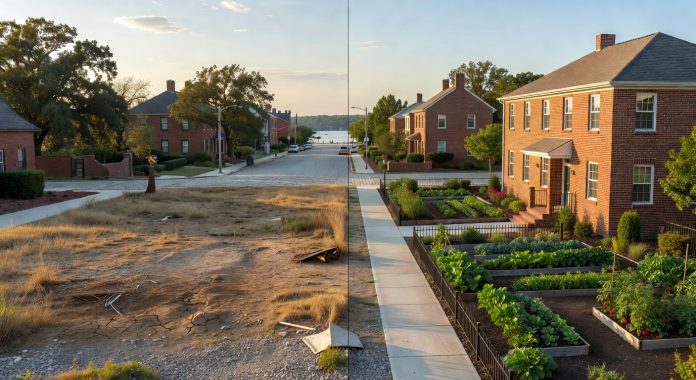
The 2026 Virginia General Assembly session featured the introduction of House Bill 72, a piece of legislation focused on modifying real property tax rules for the City of Fredericksburg. The bill was prefiled on December 31, 2025, and officially offered on January 14, 2026, after being ordered printed. Upon introduction, it was referred to the House Committee on Finance, where it underwent initial scrutiny. The bill was introduced by Delegate Joshua Cole.
HB72 proposes to amend and reenact section 58.1-3221.1 of the Code of Virginia. This amendment would specifically authorize the City of Fredericksburg to classify land and improvements to real property as separate categories for the purpose of levying real property taxes. The key feature of the bill allows the city, after issuing public notice and holding a public hearing, to set a tax rate on improvements to real property that is different from the rate applied to the land on which those improvements are located.
The bill includes important restrictions to guide this authority. The rate levied on the improvements to real property shall not be zero, ensuring that developed properties continue to contribute to the tax base. Additionally, the rate on improvements shall not exceed the rate of tax on the land. These conditions prevent the complete exemption of improvements from taxation and limit the extent to which improvements can be taxed more heavily than the land itself.
This type of separate classification for land and improvements is already permitted in several other Virginia cities, including Fairfax, Roanoke, Poquoson, and Richmond. The legislation for Fredericksburg would bring this option to one more locality, expanding the number of areas where local governments have this tax structuring tool available.
According to the fiscal impact statement issued for HB72, the bill would not require any budget amendments and would impose no administrative costs on state government. The statement further indicates that there would be no impact on state revenues. Any effects on the City of Fredericksburg’s finances, whether related to revenue generation or the costs of administering the new classification system, would only occur if the city decides to exercise the authority granted by the bill. The impacts are therefore described as unknown pending local action.
The bill advanced through the subcommittee level of the House Finance Committee. The subcommittee recommended reporting HB72, and this recommendation passed with a vote of seven in favor and zero opposed. This step indicated initial support for the measure within the committee structure.
However, on January 21, 2026, the House Committee on Finance incorporated HB72 into HB282. The incorporating bill, sponsored by Delegate Callsen, applies the same real property tax classification authority to the Cities of Charlottesville, Falls Church, Fredericksburg, and Newport News. By incorporating HB72, the committee effectively consolidated the proposal for Fredericksburg with similar requests from other localities into one comprehensive bill.
Real property tax serves as a major source of funding for Virginia’s cities, towns, and counties. It is calculated using the assessed value of real estate, which includes both the land and any improvements such as residential buildings, commercial structures, or other enhancements. In most Virginia localities, a single tax rate applies to the combined value of land and improvements. The changes proposed in HB72 would permit a departure from this uniform approach in Fredericksburg by allowing separate rates for each component.
The procedural requirements in the bill, mandating public notice and a hearing, are designed to promote transparency. Local officials would need to inform the public and solicit input before adopting any differential tax rates. This step is critical for ensuring that residents and property owners are aware of and can comment on potential changes to their tax obligations.
Public comments submitted during the committee process for HB72 included remarks on the bill’s possible effects on different types of properties. One comment stated that the bill will penalize small historic properties while rewarding large-scale redevelopment, which is already a huge problem in Virginia and Fredericksburg City. This observation points to potential shifts in tax burdens that could influence property development patterns in the locality.
Fredericksburg maintains a diverse real estate landscape that includes numerous historic sites and smaller properties alongside areas targeted for larger development projects. The authority to set different tax rates could influence decisions by property owners regarding maintenance, expansion, or new construction on their land.
The session of the General Assembly concluded on March 14, 2026, without independent passage of HB72 due to its incorporation. The provisions originally contained in HB72 are now embedded in the text of HB282, which advanced further in the legislative process. This approach allowed for a unified consideration of tax classification authority across multiple cities.
The details of HB72 offer a precise view of the authorization intended for Fredericksburg. The bill represents a targeted effort to update the Code of Virginia in response to local government requests for greater flexibility in property taxation.
Throughout its consideration, HB72 underwent standard legislative steps including referral, subcommittee review, and committee action leading to incorporation. The unanimous subcommittee vote reflected agreement on the technical merits of the proposal at that stage.
The limitations built into the bill regarding the tax rate on improvements reflect a balanced approach to granting authority. By prohibiting a zero rate and capping the rate at the land tax level, the legislation ensures that the tax system retains a base level of contribution from improved properties while allowing for adjustment.
The fiscal analysis reinforces that the ultimate outcomes rest with local decision-makers in Fredericksburg. If the city chooses to implement the classification, it would do so after following the required public processes and within the specified parameters.
Public input during the hearings brought attention to specific local considerations, such as the treatment of small historic properties in the context of redevelopment pressures. Such comments contribute to the record of how the bill might interact with existing community characteristics in Fredericksburg.
In the broader context of Virginia’s property tax framework, HB72 exemplifies how the General Assembly addresses requests from individual localities for modifications to tax laws. The incorporation into a multi-city bill demonstrates a method for handling parallel proposals efficiently.
The bill’s text and accompanying documents provide all the factual elements necessary to understand the proposed changes to section 58.1-3221.1 of the Code of Virginia. These changes focus exclusively on enabling differential taxation between land and improvements under controlled conditions.
As the legislative session ended, the record of HB72 stands as documentation of the effort to extend this tax authority to Fredericksburg. The concerns noted in public comments regarding historic properties and redevelopment add depth to the understanding of the bill’s potential application in the community.
This legislation provides local officials in Fredericksburg with an option for tailoring their real property tax approach to meet specific community needs, subject to the procedural and rate limitations established in the bill.