
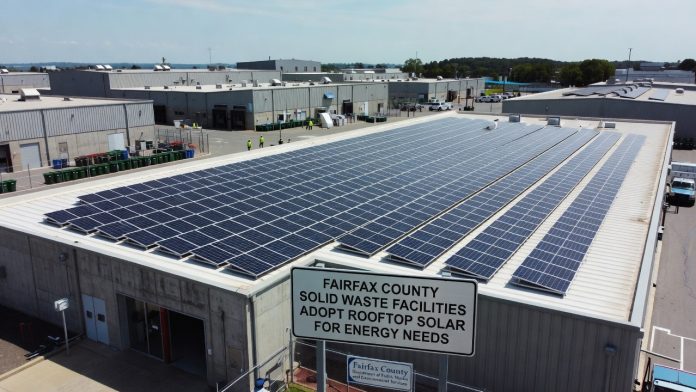
Fairfax County officials have implemented rooftop solar systems at solid waste facilities operated by the Department of Public Works and Environmental Services. These installations generate electricity to meet on-site power demands. The project aims to support operational needs through on-site renewable sources.
The solar arrays contribute to reduced electricity purchases from external providers. Facility operations benefit from this localized energy production. County reports highlight the integration of solar as part of broader infrastructure management.
Solid waste management remains a key function of the department. Reliable power supply ensures continuous processing and handling of materials. Solar technology provides an additional resource for these activities.
Operational Details of the Installations
Panels mounted on facility rooftops capture sunlight for conversion into usable electricity. This setup minimizes land use while maximizing available surfaces. Engineers designed the systems to align with existing building structures.
Power generated supports lighting, equipment, and climate control within the facilities. Integration with the local grid allows for supplemental supply when needed. County staff monitor performance to maintain optimal output levels.
The department oversees multiple sites involved in waste collection and processing. Solar adoption at these locations represents a targeted enhancement. It complements other maintenance and upgrade activities underway.
Context Within County Services
The Department of Public Works and Environmental Services manages a range of infrastructure projects. Solid waste operations form one component of these responsibilities. Energy considerations factor into planning for long-term facility viability.
County budgets allocate resources across wastewater, stormwater, and waste services. Solar installations represent one element within these allocations. Performance data informs decisions on future expansions or modifications.
Residents rely on consistent waste management services year-round. Facility efficiency contributes to overall service reliability. Ongoing evaluations assess the role of various technologies in supporting these functions.
Broader Infrastructure Considerations
Public works agencies routinely explore methods to optimize resource use. Solar power at specific sites offers one avenue for such optimization. Data collection on energy production and consumption guides further refinements.
The initiative occurs alongside standard operations including collection schedules and facility maintenance. Coordination ensures minimal disruption to public services. Staff training supports effective use of new systems.
County leadership reviews project outcomes as part of regular reporting. This process helps identify successful strategies for replication. Infrastructure investments aim to sustain essential services for the growing population.
Email Fairfax County Supervisors At:
Jeff McKay → chairman@fairfaxcounty.gov,
Kathy Smith (Sully District) sully@fairfaxcounty.gov,
Rachna Heizer (Braddock District) braddock@fairfaxcounty.gov,
James Bierman (Dranesville District) dranesville@fairfaxcounty.gov,
Rodney Lusk (Franconia District) franconia@fairfaxcounty.gov,
Walter Alcorn (Hunter Mill District) huntermill@fairfaxcounty.gov,
Andres Jimenez (Mason District) mason@fairfaxcounty.gov,
Daniel Storck (Mount Vernon District) mtvernon@fairfaxcounty.gov,
Dalia Palchik (Providence District) providence@fairfaxcounty.gov,
Pat Herrity (Springfield District) springfield@fairfaxcounty.gov,