
That decision at VMI galvanized legislators’ focus over the past year and a half on protecting Virginia’s public institutions from partisan influence in appointing members to governing boards.
The state’s college board scrutiny also follows federal investigations at two of its institutions. The University of Virginia and George Mason University faced probes from the Department of Education and Department of Justice, largely because of conflicts with President Donald Trump’s administration over diversity, equity, and inclusion initiatives.
“Through discussions with my peers — other college presidents over the last four years — and through my experience as superintendent of VMI, I’d seen how poor board governance was causing institutional harm and the increasing politicization of boards,” Wins said in an interview at the National Press Club, where the conference was hosted.
Wins said that when he was asked to apply to be appointed to the Virginia Commission on Higher Education Board Appointments, Gov. Abigail Spanberger’s administration signaled a goal to “reinvigorate” the underused commission and gather diverse perspectives on qualified candidates.
“So I knew there was a correction that needed to be made in how we understand and recognize poor governance. The question became, ‘What do we need to do to restore good governance at Virginia’s colleges and institutions?’”
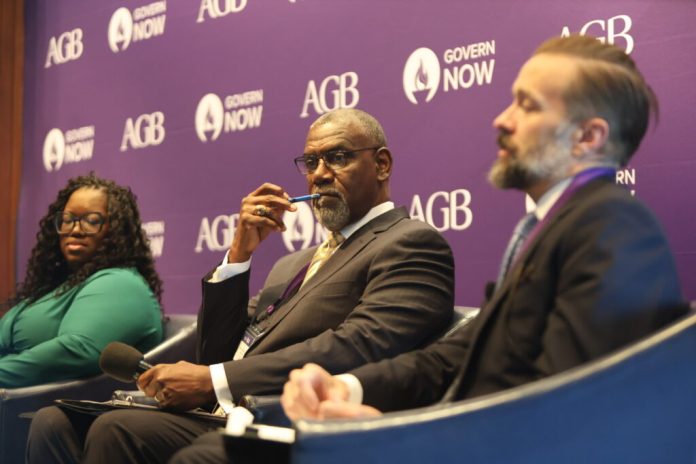
Wins, who was VMI’s 15th superintendent, spoke on the role of governing boards in protecting institutional missions and strengthening higher education governance at the event hosted by the Association of Governing Boards of Universities and Colleges.
He was joined by Geoff Landward, commissioner of higher education for the Utah System of Higher Education, and Secretary of the Commonwealth Candi Mundon King, who spoke about how the commonwealth is addressing board vacancies by appointing high-quality appointees.
Representatives from both states said their colleges have faced similar challenges, including political pressure on campus issues, board composition and behavior problems and a lack of professionalization and training among board members.
In Virginia, board and commission candidates can be considered through two methods: self-application or nomination by someone else. The roles are traditionally nonpartisan, although both Republican and Democratic gubernatorial administrations may recommend appointees join a board.
But last year, the process was called into question when Democratic lawmakers rejected several of former Gov. Glenn Youngkin appointees to Virginia’s colleges and universities, citing ideological conflicts over DEI initiatives.
Wins said he witnessed his institution’s board shift from one with “experienced, fiduciary-minded board leadership” to a body where new appointees came in with “fixed agendas” and tried to “operationalize” themselves and focus on political projects.
This overshadowed his administration’s work during the pandemic and the results of a legislatively-mandated investigation, including the implementation of the “One Corps One VMI” reform plan to modernize VMI’s culture and policies, reverse enrollment decline and ensure cadet welfare and financial stability.
King said the Spanberger administration aims to professionalize and depoliticize board appointments through its selection process, while keeping higher education anchored to its purpose as an economic engine for the state and a pathway for first‑generation and underrepresented students.
How Spanberger’s admin intends to remake college boards
When Spanberger’s term began in January, her administration had to fill 27 vacancies on governing boards at Virginia’s colleges and universities.
King, who estimated on Monday the administration has filled at least 100 appointments on boards and commissions in total, said its approach has focused on skills-based, diverse, and non-litmus-test appointments.
“It was important for us to put the right people in those positions, regardless of politics … And so we don’t have a test of who you voted for or what you believe on this particular issue. Our question is simple: Do you understand the difference between governance and operations?”
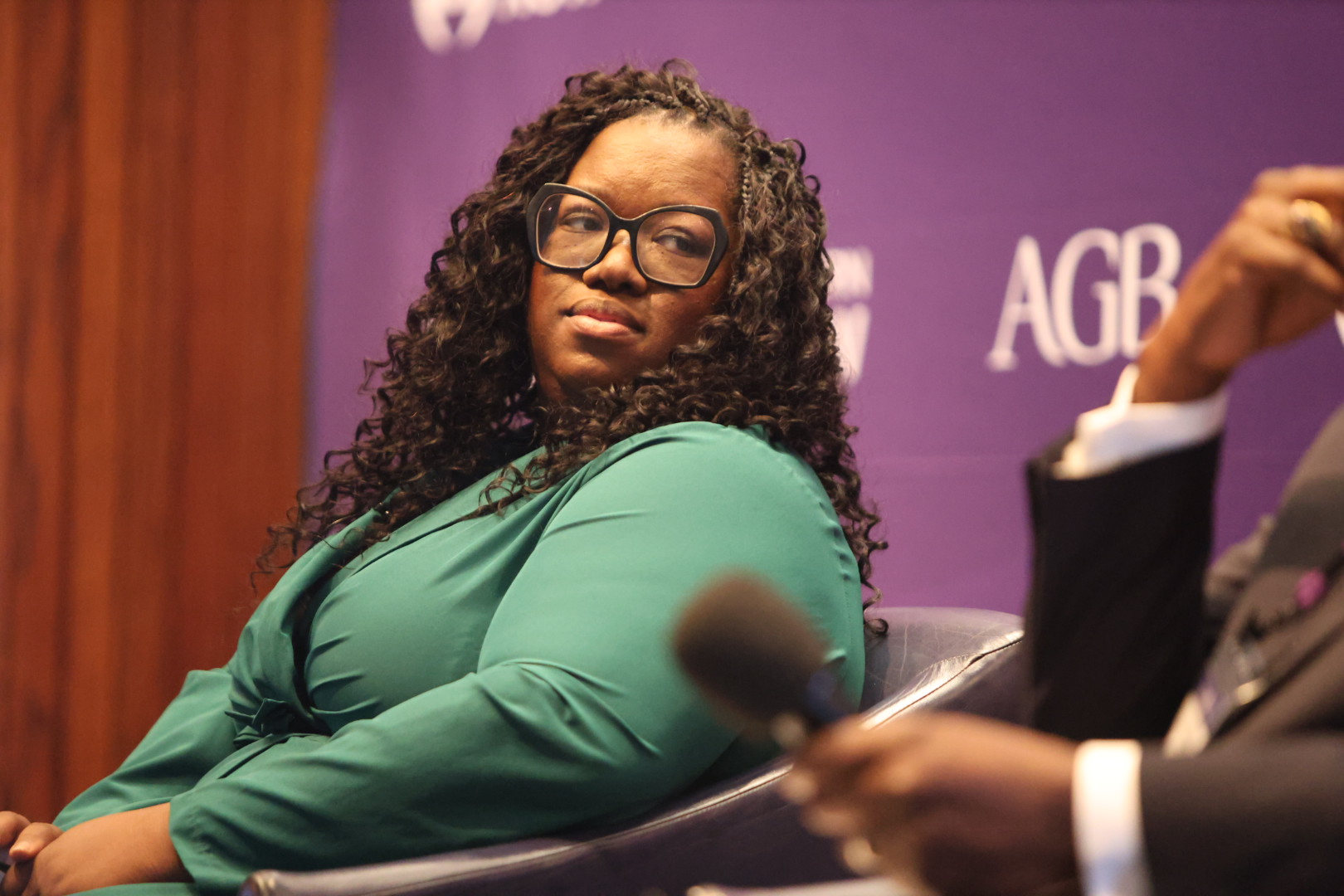
King also argued that every board member should receive required governance training within the first 60 days, with extra training for rectors and board presidents on authority and limits. Virginia does not have a statutory training requirement for board members, but some boards have implemented training standards.
Framing higher education as a unifying economic issue, King urged legislators to view universities as economic engines. She added that Virginia’s rise from fourth to third in CNBC’s Top States for Business rankings, and the state’s broader economic success, is directly tied to the strength of its higher education system.
King also said higher education decisions and governance should center on students, especially those who are about to start college and first‑generation learners.
“This is all about 17-year-olds who are making decisions to select a college or university that will impact the trajectory of their entire lives,” King said. “And if they’re a kid like me, it will impact the trajectory of their entire family’s life, because in my family now, college is an expectation.”
Commitment to strengthening higher ed governance
Lawmakers proposed measures this year that would have revised membership and governance requirements for governing boards of public higher education institutions. Spanberger tried to tweak them before ultimately rejecting them.
On May 19, the governor vetoed one of the most notable bills, Senate Bill 494 carried by Sen. Creigh Deeds, D-Charlottesville. It would have removed certain provisions that could “further politicize our institutions of higher education” and “undermine the current efforts of my administration and boards to stabilize governance of the commonwealth’s universities.”
If successful, the legislation would have also changed public higher education governing board appointments from four-year to six-year terms, limited gubernatorial appointees to a single six-year term with a two-year waiting period before returning to the same board and required nonvoting advisory representatives from faculty, staff, and student bodies.
The proposal added provisions defining governing board authorities and responsibilities, including “quorum” requirements, executive committee responsibilities and board duties and restrictions.
It also would have required governing boards to adopt shared governance policies, based on model policies developed by the State Council of Higher Education for Virginia, with the goal of establishing clearer processes for participation in institutional decision-making.
Spanberger suggested removing provisions of the bill that had “no clear connection to addressing the challenges our boards have experienced in recent years” and clarified various timelines and processes for appointments to affirm the General Assembly’s role.
“Strengthening these institutions requires strong, effective governance across our colleges and universities,” Spanberger said, and recent challenges have “demonstrated the importance of reinforcing governance structures and processes so that our institutions remain resilient and successfully advance their missions.”
Lawmakers rejected the governor’s changes and she vetoed the bill.
In January, Spanberger issued an executive order directing members of her cabinet to submit a report on the nomination process for Virginia’s boards and commissions.
The governor’s office did not respond to questions about the status of the report.