
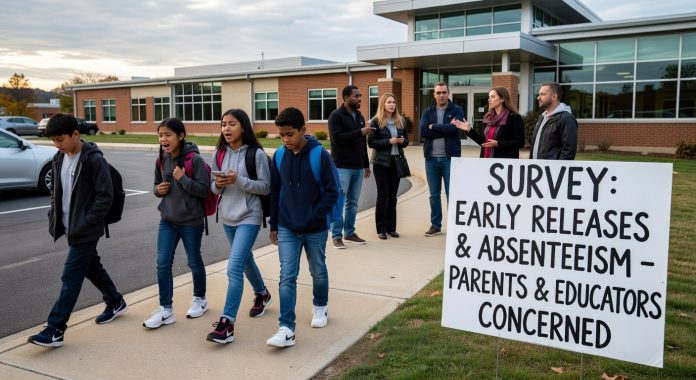
The discussion centered on Fairfax County School Board matters, with the board comprising Chair Sandy Anderson of Springfield District, Ricardy Anderson of Mason District, Melanie Meren of Hunter Mill District, Robyn Lady as Vice Chair from Dranesville District, Seema Dixit of Sully District, Tom Dannan, Marcia St. John-Cunning, Mateo Dunne, Karl Frisch, Kyle McDaniel, Ryan McElveen, and Ilryong Moon. This body governs Fairfax County Public Schools, a district educating approximately 180,000 students.
The speaker noted specific challenges, such as early releases aligning with Fridays, which could lead to higher absenteeism and render the day unproductive for learning. Absenteeism rates were cited as spiking on these days, complicating efforts to maintain attendance. Examples included Wednesday early releases for elementary students and scheduling conflicts around PSAT testing days affecting high schoolers alongside others.
Context from district practices shows elementary schools incorporating monthly early release days to allow teachers time for planning, professional training, and interventions for chronically absent students. Recent reports indicate this approach has come under scrutiny, with parents advocating for additional full five-day instructional weeks. Thousands of messages from families have reached board members on this topic.
The survey underscores tensions between administrative needs and family schedules. Proponents of early releases argue they enable targeted support, potentially addressing absenteeism long-term. However, the presented data suggests immediate disruptions, including learning interruptions and increased absences, particularly problematic for working parents managing childcare.
Fairfax County Public Schools has faced broader calendar debates, including votes on holidays and instructional days. Recent meetings have featured public comments and board discussions on balancing teacher development with student contact time. The district’s efforts to combat chronic absenteeism remain ongoing, with early release periods partly allocated to related strategies.
No immediate policy shifts were announced following the presentation, but the survey has amplified ongoing conversations. Board members continue to review feedback as they refine the academic calendar. Stakeholders, including parents and educators, monitor these developments closely amid Virginia’s emphasis on improving attendance and academic recovery.
The findings prompt questions about optimizing school schedules for maximum effectiveness. While early releases provide professional opportunities, their frequency raises valid concerns about continuity and equity. Fairfax County’s approach reflects wider challenges in public education, where instructional time competes with operational demands.
As the school year progresses, attention will focus on attendance metrics and calendar adjustments. The board’s response to such data will shape future planning, ensuring alignment with community input and educational priorities.
Source: Field reports and eyewitness accounts.