
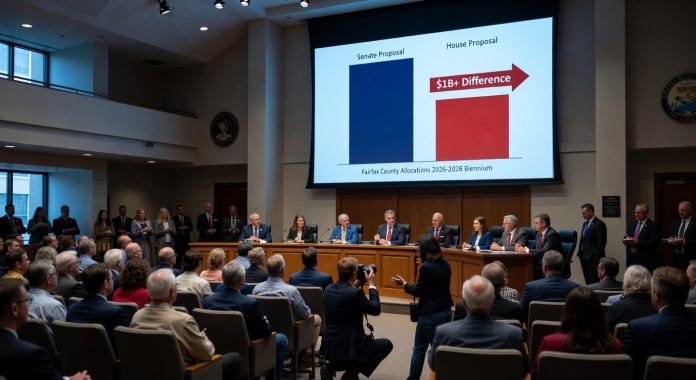
Fairfax County, Virginia’s most populous locality with more than 1.1 million residents, faces significant budgetary implications from these discrepancies. The House proposal, which has been formally adopted, incorporates funding for K-12 education among its provisions. In contrast, the Senate version introduces notable changes to education allocations, alongside differences in human services and transit funding, contributing to the overall $1 billion-plus divide over the two-year period.
Among the contentious items are proposals related to sales tax exemptions for data centers, equipment, and associated infrastructure. Discussions include potential sunsets of these exemptions, which have supported the growth of Northern Virginia’s data center industry. Transit funding, essential for Fairfax’s extensive commuter networks including connections to Washington, D.C., also features prominently in the differences.
The process follows familiar patterns from prior biennial budgets. Each chamber passes its version, often rejecting the other’s amendments, leading to appointment of conference committees. Monitors are typically assigned to track progress as negotiations unfold, aiming for a compromise before the session adjourns.
Fairfax County’s reliance on state support underscores the stakes. K-12 education serves over 188,000 students in Fairfax County Public Schools, one of the nation’s largest districts. Human services address needs from child welfare to aging populations, while transit investments support Metro and local bus systems critical for daily commutes.
The General Assembly’s budget process begins with the governor’s introduced plan, followed by House consideration, Senate amendments, and reconciliation. For the 2026-2028 cycle, starting July 1, 2026, these differences highlight competing priorities: bolstering education and services versus fiscal adjustments like tax policy changes.
Data centers have become a cornerstone of Virginia’s economy, with Fairfax and nearby Loudoun County hosting clusters that generate billions in revenue. Exemptions from sales taxes on equipment have facilitated expansions, though critics argue for reevaluation amid infrastructure demands like power and water.
As in previous sessions, expect rigorous debate. Conference committees, comprising members from both chambers, will negotiate line by line. Historical precedents show compromises often split differences, incorporating elements from each side while addressing gubernatorial veto concerns.
Local officials in Fairfax monitor closely, as state allocations influence county budgeting. The $1 billion figure encompasses cumulative impacts across categories, not a single line item. Resolution will shape resource distribution for schools, social programs, and transportation through 2028.
The briefing by legislative staff serves as a roadmap for stakeholders, from county administrators to advocacy groups. With the session ongoing, updates on conference progress are anticipated. Virginia’s biennial budget, constitutionally required every two years, remains a focal point of legislative activity.
This development occurs amid broader fiscal discussions, including revenue forecasts and economic outlooks. Fairfax’s role as a federal workforce hub and tech corridor amplifies the proposals’ significance. Final passage requires both chambers’ approval and gubernatorial action, potentially including amendments or vetoes.
Observers note the proposals reflect chamber-specific emphases, with the House emphasizing certain inclusions like K-12 and the Senate proposing adjustments. The path to consensus involves technical work by fiscal analysts and political bargaining among delegates and senators.
As the budget battle continues, all eyes remain on Richmond for outcomes affecting Fairfax and beyond.
Source: Field reports and eyewitness accounts.