
The Virginia General Assembly has approved a new law intended to equip the state’s workforce with the skills necessary for the offshore wind industry. House Bill 67, which became law as Chapter 362, was signed by the governor and will take effect on July 1, 2026. The legislation focuses exclusively on developing training programs and resources through the Department of Energy, utilizing existing funding avenues.
At the core of the bill is a directive to the Director of the Department of Energy to identify and develop training resources that promote workforce development in the offshore wind sector. This includes the establishment of specialized curricula for offshore wind careers. The training encompasses pre-hire soft skills training designed to prepare individuals for the workplace environment, as well as technical skills training targeted at manufacturing trades. Additional components address the needs of providers of offshore wind products and services, maritime workers, and participants in various other skilled trades.
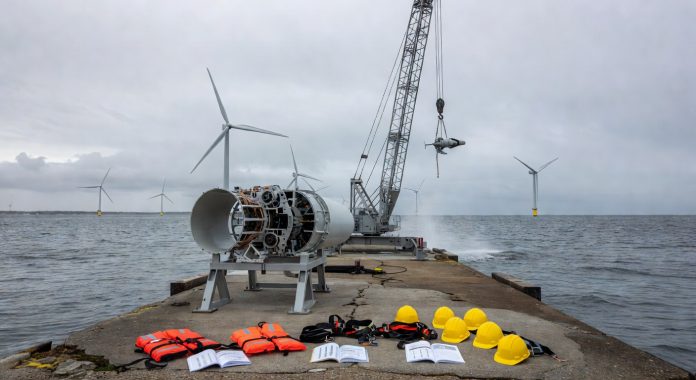
The law requires a thorough assessment of the current presence and capabilities of offshore wind developers, original equipment manufacturers, and supply chain firms located in the Commonwealth. This assessment will inform decisions on whether to establish a Global Wind Organisation training program. Such a program would deliver standardized safety training to meet minimum requirements for offshore wind workers. Specific topics covered would include fire awareness, first aid procedures, sea survival techniques, methods for working at height, and manual hauling practices essential for safe operations in offshore settings.
Funding for these training initiatives is limited to existing local, state, or federal funding sources and grant resources. The bill explicitly avoids creating new financial obligations or dedicated appropriations for the program, instead encouraging the use of currently available resources to support skill development efforts.
In addition to the training development, the legislation mandates the production of a report detailing the activities undertaken and the resources developed. A sunset provision is also included, which will cause the program to expire after a specified timeframe unless extended by future legislative action. This feature allows for periodic review of the program’s effectiveness and relevance.
The anticipated outcomes of the law include significant job creation in the Hampton Roads area and surrounding regions. The training programs are designed to prepare Virginians for thousands of positions in turbine manufacturing, installation, operations, and maintenance roles. These opportunities are expected to contribute to the expansion of the local economy by providing skilled employment in a growing industry.
Furthermore, the bill is positioned to strengthen key Virginia industries. Enhanced workforce capabilities in offshore wind are projected to support and expand shipbuilding activities, improve efficiencies in port operations, and fortify supply chain networks associated with energy production. By integrating new skills into the existing industrial base, the state can leverage its strengths in maritime and manufacturing sectors for broader economic gains.
This legislation follows a previous attempt during the prior session of the General Assembly. A similar measure received bipartisan support at that time but did not become law due to a veto. The current bill refines the strategy by concentrating on workforce preparation through established state agencies and without direct involvement in funding energy generation projects.
The bill was introduced by Delegate Michael Feggans on December 30, 2025. It advanced through the House of Delegates, where it passed with a vote of 85 in favor and 12 opposed. In the Senate, it was reviewed by the Finance and Appropriations Committee, which reported it favorably with a 10 to 4 vote before full chamber approval. The companion bill, Senate Bill 25, is identical in content, facilitating coordinated progress in both legislative bodies.
Implementation will involve collaboration between the Department of Energy and various stakeholders to evaluate training needs and close any identified gaps. This process will help establish educational pathways and certification programs that align with industry standards and demands. By focusing on accessible training options, the law aims to enable more Virginia residents to access these career opportunities without relocating or seeking external education.
The emphasis on safety training aligned with the Global Wind Organisation standards ensures that graduates of these programs will possess internationally recognized qualifications. This can enhance their employability not only within Virginia but also in offshore wind projects nationwide.
In the Hampton Roads region, known for its robust port facilities and naval shipbuilding heritage, the new training resources could stimulate additional investment and business activity. Local companies involved in supply chain support may find new avenues for growth as they adapt to the requirements of offshore wind development.
The law’s reliance on existing funding mechanisms reflects a commitment to efficient use of public resources. Rather than establishing a new bureaucratic structure with dedicated budgets, the program will build upon current agency capabilities and external grant opportunities to deliver results.
As the effective date nears, preparations are underway to begin the assessment phase and curriculum development. This proactive approach will position Virginia to capitalize on the expansion of the offshore wind sector along its coast.
The legislation represents an effort to adapt the state’s workforce to evolving industry needs while maintaining fiscal prudence. By prioritizing skill development in high-demand areas, it seeks to foster long-term economic stability and growth for communities across the Commonwealth.
Overall, House Bill 67 provides a comprehensive framework for workforce enhancement in the offshore wind industry, emphasizing practical training, safety, and economic integration with Virginia’s existing industrial strengths.