
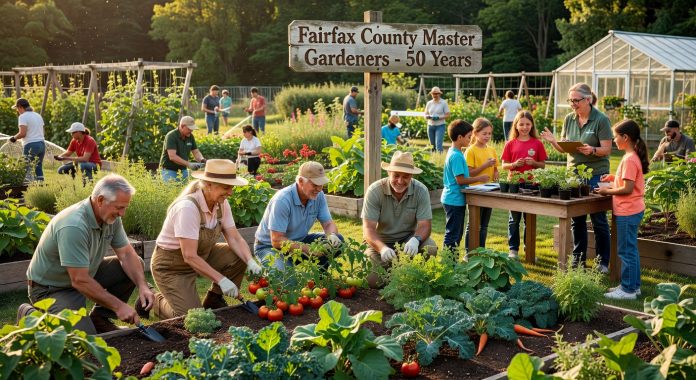
Fairfax County Master Gardeners have reached the milestone of fifty years of activity centered on horticulture, education, and efforts related to hunger. The group operates under the framework of Virginia Cooperative Extension and provides structured opportunities for residents to learn and apply gardening techniques.
Educational components include programs designed for fourth grade students. These sessions present information on plant growth, soil health, and basic agricultural concepts using methods supported by extension research. Participation allows students to engage with topics through direct observation and simple activities.
Community service forms a key element of the organization’s efforts. Volunteers dedicate time to sharing knowledge about sustainable gardening practices that can contribute to local food supplies. This work occurs through regular outreach in various settings within the county.
The approach to addressing hunger relies on increasing the capacity for home and community food production. Participants receive guidance on growing vegetables and other edible plants suited to the regional climate. Such methods aim to supplement available food resources through individual and group action.
Research-based content ensures that instructional materials reflect current agricultural standards. Volunteers complete training that prepares them to convey accurate information on topics including crop selection and maintenance. This preparation supports consistent delivery across all programs.
Volunteering has enabled the expansion of reach over five decades. Individuals trained by the group apply skills in personal and shared garden spaces, extending the impact beyond formal sessions. The structure encourages repeat engagement from community members.
Programs targeting fourth grade students introduce foundational concepts at an early stage. Activities focus on the connection between gardening and nutrition, using examples that illustrate the process of growing food. Support from extension resources provides the necessary materials and frameworks.
The fiftieth year of operation provides an opportunity to review the cumulative effects of sustained volunteer involvement. Efforts in horticulture education have contributed to broader community awareness of local growing possibilities. Hunger-related initiatives have emphasized practical steps that individuals can take.
Continued service involves adapting to current conditions while preserving the core commitment to research-supported practices. Volunteers maintain focus on delivering information that helps residents improve their gardening outcomes. This continuity has characterized the group since its establishment.
Community impact stems from the combination of education and direct application. Residents who participate gain tools for producing food, which can reduce reliance on purchased supplies. The model promotes ongoing local involvement in food-related activities.
Support structures associated with the programs facilitate the work of volunteers. Cooperative extension ties provide access to verified information and resources that underpin all educational offerings. Fourth grade outreach benefits from these connections to maintain program quality.
The emphasis on fighting hunger through gardening education reflects a localized strategy. By equipping participants with knowledge, the organization contributes to incremental improvements in food availability at the household level. Volunteering ensures that these benefits are delivered without centralized mandates.
Fifty years of activity illustrate the persistence of extension-based volunteer programs in Fairfax County. The integration of horticulture instruction, student engagement, and hunger reduction efforts has formed the basis for ongoing community contributions.