
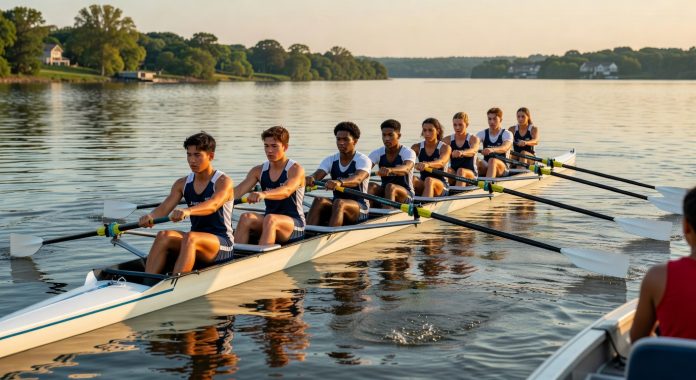
Rowing functions as a club sport adhering to Virginia High School League standards within Fairfax County Public Schools, relying on participant fees, boosters, and fundraising rather than school budgets. Team representatives highlighted seasonal expenses approaching $28,000 for basic operations, including daily booster payments of $690. High dues were described as prohibitive, limiting participation, while aging equipment requires replacement to maintain safety and performance.
Access to the rowing facility, located 45 minutes from the school by river, adds logistical strain. Fewer families can supply transportation, creating disparities compared to other programs where such support is more available. These factors contribute to what the team calls an equity gap, with Justice lacking the resources of more affluent schools despite compliance with league rules.
The presentation emphasized the program’s value for student development while seeking solutions to sustain it. Fairfax County Public Schools oversees 180,000 students across diverse communities, with Title I designations targeting high-poverty areas for federal support. Club sports fill gaps in offerings but expose funding inequities, prompting discussions on potential district assistance or partnerships.
District-wide, FCPS navigates budget pressures, including enrollment shifts and performance metrics. Recent meetings have covered related topics like teacher retention and facility use, framing the rowing issue within broader equity debates. The School Board has not yet responded publicly to this testimony, but it aligns with ongoing dialogues on access to extracurriculars.
Justice High School, serving the Falls Church area, maintains the team amid these hurdles, with students advocating for change to preserve opportunities. VHSL guidelines ensure competitive integrity, but local adaptations vary by funding capacity. Observers note similar challenges in other districts, where club sports balance participation and costs.
The testimony sheds light on how economic demographics influence athletics, with Title I schools often prioritizing core needs. Potential remedies could include grant programs, shared resources, or fee waivers, though implementation requires Board approval. As Fairfax County addresses education priorities, this case illustrates tensions between fiscal constraints and inclusive access.
Further details on costs and comparisons were presented via visuals during the session, underscoring the $28,000 figure for the season and daily booster outlays. Equipment condition and transport logistics were flagged as immediate barriers, with calls for intervention to level the playing field.
Stakeholders await Board action, as the rowing team’s persistence highlights dedication despite odds. This matter joins conversations on FCPS budgeting, where extracurricular equity intersects with academic funding.
Source: Field reports and eyewitness accounts.