
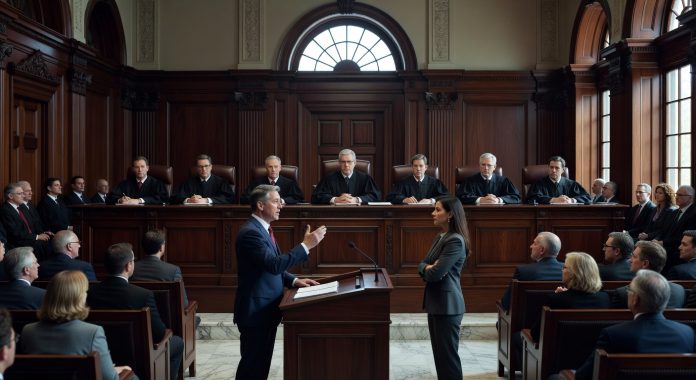
The amendment stems from Democratic efforts in the General Assembly to revisit congressional maps drawn in 2021 by the state Supreme Court. Those maps, created after a 2020 voter-approved measure established an independent commission, resulted in a configuration reflecting Virginia’s competitive politics, approximately 7 Democratic-leaning districts to 4 Republican-leaning ones. Proponents of the new amendment argued it would enhance fairness by adjusting the commission’s structure amid ongoing litigation.
However, opponents, including state Senator Glen Sturtevant, highlighted procedural flaws during a Senate floor address on April 23. Sturtevant pointed to a special session extended nearly two years beyond its budget focus to advance the amendment, lack of an intervening general election between passages, insufficient pre-election notice publication, and allegedly misleading ballot language emphasizing ‘fairness.’ A Tazewell County circuit court agreed, ruling the process void ab initio, the ballot deceptive, and blocking certification hours after results were reported.
Democrats, who control the legislature and Governor Abigail Spanberger’s administration, maintain the amendment corrects imbalances from prior maps and aligns with voter intent. Supporters note the narrow victory despite heavy Republican opposition and out-of-state funding on both sides. The attorney general’s office has appealed, with oral arguments anticipated soon.
Background traces to Virginia’s turbulent redistricting history. Post-2020, voters endorsed shifting from legislative control to a bipartisan commission. GOP attempts at partisan maps were rejected, leading to court intervention. Democrats now seek modifications, projecting a potential 10-1 Democratic advantage under revised lines, though exact maps await commission action if approved.
The trial court’s swift injunction underscores the amendment’s legal vulnerabilities. It cited constitutional requirements unmet, including timely notice and proper sequencing. Critics argue the ballot obscured partisan impacts, while backers say voters understood the fairness pitch amid national gerrymandering debates.
Sturtevant urged the Supreme Court to uphold the rule of law, questioning whether the constitution binds those in power or allows shortcuts. ‘Does the Constitution of Virginia still mean what it says?’ he asked, framing it as a test of protecting rights out of power.
The case arrives amid national redistricting battles, with House Minority Leader Hakeem Jeffries commenting on broader implications. In Virginia, the outcome could preserve current maps through 2031 or trigger new draws favoring Democrats, altering House representation.
Local turnout was robust, with Republicans mobilizing against what they termed a power grab. Preliminary figures show 51.5 percent yes versus 48.5 percent no, a slim margin amplifying legal scrutiny. The Supreme Court, noted for textualist interpretations, will weigh if procedural lapses invalidate the vote.
Stakeholders await resolution, as midterms loom. If struck down, existing maps stand; approval advances Democratic goals. The decision will influence Virginia’s congressional delegation and set precedents for amendment processes.
Source: Field reports and eyewitness accounts.