
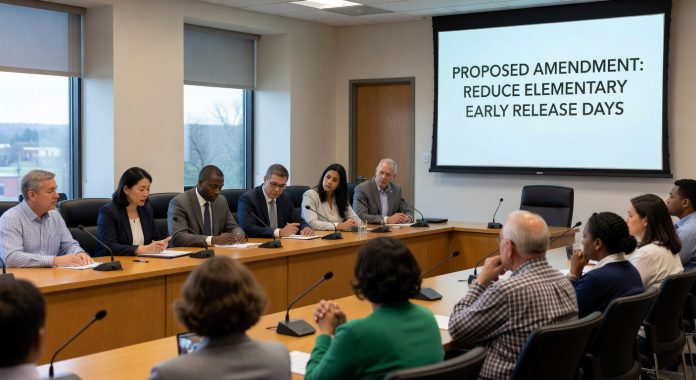
The board, consisting of Chair Sandy Anderson (Springfield District), Ricardy Anderson (Mason District), Melanie Meren (Hunter Mill District), Robyn Lady (Vice Chair, Dranesville District), Seema Dixit (Sully District), Tom Dunn (Dranesville District representative), Karl Frisch (Providence District), Rachna Sizemore Heizer (Braddock District), Mateo Dunne, Marcia St. John-Cunning, Kyle McDaniel, Ryan McElveen, and Ilryong Moon, debated the measure in a public meeting.
According to discussions, the 2025-26 school calendar includes 12 early release days for elementary students. The amendment proposes adjusting the language to designate four early release days specifically, reducing the overall number and addressing what some members described as inconsistencies in current scheduling. One board member noted the existing setup involves early release days plus nine additional ones, creating a total of 12 that impact student attendance and parent logistics.
Proponents argued that dedicated planning time is essential for teachers to develop lessons effectively. Tom Dunn, representing the Dranesville District, stressed the importance of this time, pointing out that without it, inequities arise in instructional quality. He referenced the need for guaranteed periods amid other calendar commitments, suggesting the reduction would streamline schedules while maintaining necessary preparation opportunities.
Opponents highlighted potential burdens, particularly for working parents managing early dismissals. The conversation touched on whether a ‘level’ of four days would suffice for development purposes, and how the change aligns with broader equity goals. References to eight early release days in current phrasing indicated the amendment aims to clarify and consolidate.
The debate reflects ongoing calendar adjustments in Fairfax County Public Schools, which serve over 180,000 students. Recent meetings have addressed holiday observances, with votes on items like Veterans Day and Indigenous Peoples’ Day drawing public input. Parents have expressed preferences for more consistent five-day weeks, submitting thousands of messages to board members. Enrollment trends and performance metrics, including state-flagged underperforming schools, provide context for these scheduling decisions.
No final vote on the early release amendment was detailed in available accounts, but the discussion underscores tensions between instructional support and family schedules. Board members weighed the total impact, with one noting 12 days on top of baseline commitments. The proposal seeks to balance teacher needs with student time in school, potentially standardizing practices across elementary levels.
Fairfax County Public Schools continues to navigate these issues amid public scrutiny. Meetings feature student representatives and community comments, as seen in recent sessions challenging calendar elements. The board’s actions follow Virginia law prohibiting current employees from serving, ensuring members represent community interests as parents and professionals.
As deliberations proceed, the outcome will shape the 2025-26 academic year for elementary families and educators alike. Updates from official channels will clarify the amendment’s status.
Source: Field reports and eyewitness accounts.































