
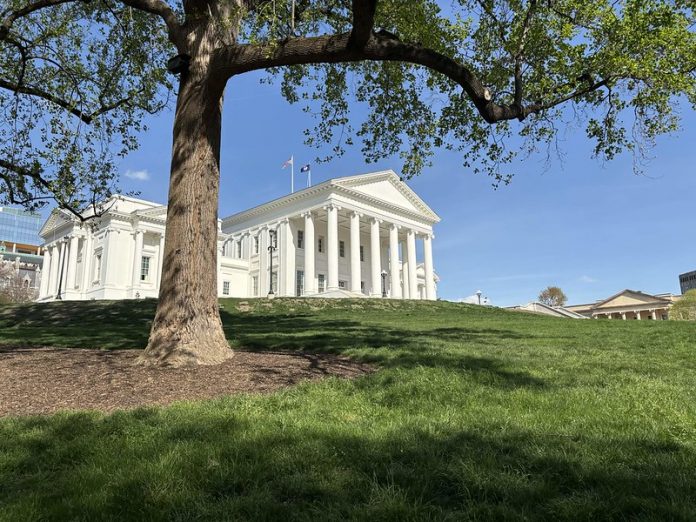
By Kacy Lee/VCU Capital News Service
RICHMOND, Va. — Hundreds of bills were continued to 2027 following the recent Virginia General Assembly session that concluded in mid-March, a method political experts say is increasingly used by lawmakers for several reasons.
A total of 2,366 bills were introduced to the legislature, excluding resolutions, with 433 bills continued, according to statistics on the legislative information system. Legislation can only be continued in even-year sessions.
Some bills get continued due to financial concerns, according to political scientist and managing consultant Bob Holsworth.
“The budget is relatively tight,” Holsworth said. “What sometimes happens is that the bill comes to a committee, the committee may pass it, and it goes to the Finance and Appropriations Committee and they have a concern about it—they continue it.”
Other bills are continued as a way to kill it without offending the patron. Other times, a bill is controversial and has different organizations and groups opposing it, so lawmakers may continue them in order to find a compromise or solution at a later date, Holsworth said.
Virginia has one of the shorter legislative sessions in the U.S. That also constrains deliberation, and impacts decision making, according to Holsworth.
The number of continued bills, regardless of the government’s partisanship, has only increased in recent years, based on analysis of bill statistics.
A look at the bill continued in the past six even-year sessions:
-
370 bills continued in 2024
-
203 bills continued in 2022
-
366 bills continued in 2020
-
186 bills continued in 2018
-
220 bills continued in 2016
-
205 bills continued in 2014
Many of these bills are continued due to the “partisan nature” of the Virginia legislature, as well as lawmakers’ sensitivity to the fiscal impact, according to Holsworth.
“They don’t want to pass something knowing how much it might cost down the road if they’re unsure of that,” Holsworth said.
Data Centers
Several bills pertaining to the regulation and measurement of data centers were continued in the recent session. The reason behind the large amount of continued data center bills is due to the lack of consensus from legislators regarding what to do about them, according to Holsworth.
Due to the rapid expansion of data centers, legislation centering around energy use, affordability and the environment were popular during the session.
Virginia is home to nearly 150 of all known hyperscale data centers worldwide, according to the Virginia Economic Development Partnership, and there are hundreds of smaller scope data centers. Hyperscale centers are defined as massive data centers that handle large workloads.
“They’re very attractive to local governments because of the taxes they bring in, but there’s growing concern about the environmental issues, the water issues that are involved,” Holsworth said. “There’s even concern as we saw about the tax exemptions that they get.”
Lawmakers Hearing Constituent Concerns
Several advocacy groups rallied at Capitol Square in efforts to pass comprehensive state regulations on data centers, including the Sierra Club and the Virginia Data Center Reform Coalition.
“This is one of the biggest issues facing our generation,” said Sierra Club lobbyist Mary-Stuart Torbeck in a previous interview. “Especially with other affordability issues coming into it, the rest of the country is looking at us. Lawmakers know this is an issue; they’re hearing from their constituents.”
Multiple groups lobbied on different days regarding the myriad of intersecting issues data centers present, including clean energy, water, pollution and land use, according to Torbeck.
While a few bills placing state regulations on data centers have been approved by Spanberger, many others continued or failed during the session.
What Happens for Continued Bills
The last day to act on continued legislation is Nov. 16, according to House clerk Paul Nardo. Typically, only the House Appropriations Committee meets during the off season.
“So if past is prologue, then most of the carried over legislation will die if not acted upon by the November deadline,” Nardo stated over email.
Any bills that do not make it past this date will die prior to the 2027 General Assembly session start next January.