
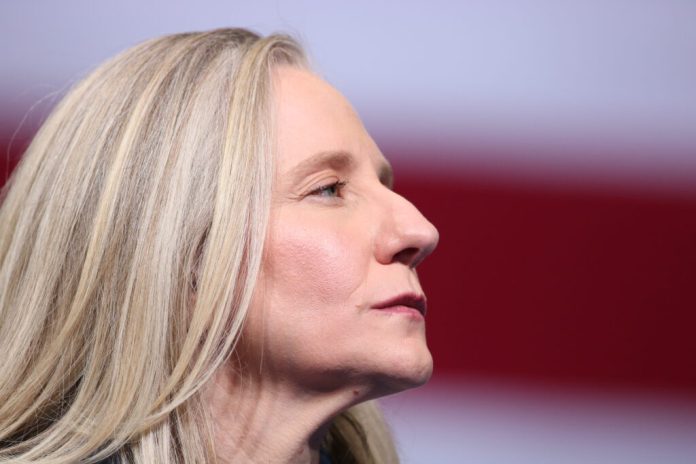
Gov. Abigail Spanberger signed and suggested changes to dozens of bills this week, including tweaks to a key energy measure that’s at the center of legislative and public debate about data centers shouldering more costs for the state’s growing power demands.
Spanberger suggested sweeping alterations to Senate Bill 253 and House Bill 1393, sponsored by Sen. Louise Lucas, D-Portsmouth, and Del. Destiny LeVere Bolling, D-Henrico, measures designed to shift more costs onto data centers to save residential electricity customers money and expand a power line burial program.
What the bills do
SB 253 and HB 1393 would extend Dominion Energy and Appalachian Power Company’s weatherization and bill assistance programs for low-income customers.
The bills would also shift certain costs onto high-load users including data centers and large manufacturers that fall under the new GS-5 rate class for Dominion customers.
Those costs include the full price of capacity auctions, which the companies pay in order to purchase power from the regional grid operator PJM so they can maintain grid reliability during high power use days.
The bills would also allow the State Corporation Commission to potentially approve shifting the cost of new distribution infrastructure that serve the high-load customers, which lawmakers said could save residential customers $5.52 a month. The provision would increase high-load customers’ monthly bills by about 15%.
The bills contain a one-time opt out of the GS-5 rate class for facilities that have over 200 full-time employees. This way they won’t be beholden to the same requirements but will have different rates.
Dominion’s Strategic Undergrounding Program (SUP) would be also renewed under the measures. The program, started in 2014, has led to 2,900 miles of distribution lines being buried in the most outage-prone areas of the state.
The utility has spent $1.4 billion burying lines, which equates to a $4.88 monthly price tag for residential customers. The program was set to sunset in 2028 but the bills extend that to 2038..
Customer advocates said that the SCC should have more discretion in deciding if burial of lines is a reasonable cost and benefit to all customers. Legislation passed 10 years ago that ended the commission’s authority to deny undergrounding lines under the cost per mile cap that was $750,000.
The two bills that passed this year would increase that cap to $900,000 and limit the investment in the program to a maximum of 4% of the distribution rate base.
What the governor’s amendments aim to change
The amendments handed down from Spanberger strike out the explicit cost shift mechanism in the bills, preventing the capacity and distribution infrastructure costs from being placed on the high-load customers.
Spanberger replaced that aspect of the bill with language that more plainly directs the SCC to be mindful of not passing down costs from high-load customers onto the rest of the customer base, weakening its key provision.
The amendments change the one time opt-out threshold. They raise the number of full-time employees at a company to 10,000, which would limit the ability to switch rate classes to a small portion of the companies. It would also only apply to existing customers, not any new customers who have yet to come online.
For the power line burial program the amendments lower the incremental price increase the utility is allowed to charge ratepayers from 4% to 2%, which significantly reduces how much the company can invest in their goal of burying 4,000 miles of distribution lines.
It also eliminates the assumption that projects under the proposed $900,000 per mile cap are prudent and reasonable – which could lead to potential projects being denied by the commission even within the price cap.
Spanberger also proposed adding an entirely new piece of policy onto the bills, which appears to be a cost-savings attempt for residential customers.
The SCC currently decides how much return on equity the utilities can make during their biennial rate cases. Most recently, the SCC allowed Dominion a 9.8% return. Spanberger added a provision that directs the SCC to cap the return on equity at 9.3% and any earnings over that would be returned to the customers on their bills.
Reaction to changes
The ongoing debate over the state budget fueled the governor’s alterations to the bills, she said this week. Lawmakers are still at odds over whether data centers’ sales and use tax exemption should continue.
The House version of the budget kept the exemption, but the Senate version removed it. Virginia misses out on an estimated 1.6 billion annually from allowing data centers to opt out of paying the 5.3% tax on their equipment and software upgrades, Lucas said in February.
“There are efforts afoot in the General Assembly, as it relates to the budget, to ensure that data centers are paying their fair share, as I think everyone broadly agrees is necessary,” Spanberger told reporters Tuesday. ”And so that will continue to play out in those negotiations.”
Bolling said the governor’s office didn’t consult with her before the amendments were released. While she is still reviewing the amendments, she anticipates her colleagues in the legislature will reject the majority of them.
“HB 1393, as passed by the General Assembly, reflects months of work to strike a careful balance — expanding energy assistance and weatherization programs for low-income Virginians while ensuring fairness in how costs are allocated and protecting the broader ratepayer base,” she said in a statement.
Dominion also favors preserving the bills as passed during session.
“We fully supported the legislation’s original goals of lowering costs for our customers, expanding energy assistance, and reducing outages. The amendments undermine these goals,” a spokesperson for the utility said.
The legislature will return to Richmond on April 22 to review Spanberger’s changes to their bills. They will have to decide whether to reject the amendments, which could leave them vulnerable to a veto, or accept the changes.
On April 23, a special session to finalize the outstanding budget will begin. However, some lawmakers are skeptical on if a deal will be reached in time. “I’d be really surprised that there’s a budget by April 23rd. Anything’s possible, but I’d be really surprised,” Sen. Scott Surovell, D-Fairfax, said Tuesday.