
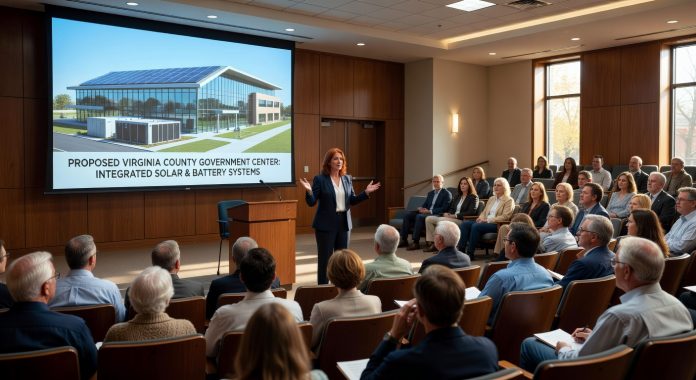
The commenter commended these provisions as successful steps toward environmental protection but advocated for additional requirements: installation of rooftop solar panels and battery storage systems. Describing the site as suitable for a model public property, the speaker called on the board to treat the opportunity as a chance for government to demonstrate leadership by example within the county. This input aligns with ongoing discussions around integrating renewable energy into public infrastructure.
The Tuscarora Land Bay 4 project represents part of broader efforts to expand county facilities amid growing demands for administrative services. Planning processes have incorporated public feedback, with remote participation enabling broader involvement. The proposed conditions address key concerns including stormwater management, habitat preservation, and sustainable site practices, ensuring compliance with local zoning and environmental regulations.
Proponents of the additional solar and battery features argue they position the government center as a forward-thinking facility, potentially reducing long-term energy costs and showcasing commitment to green initiatives. Such integrations have become common in public projects nationwide, supported by federal incentives and state energy goals. The commenter’s remarks highlight tensions between standard development approvals and aspirations for enhanced sustainability in taxpayer-funded builds.
County planning meetings routinely feature such diverse inputs, informing decisions on zoning modifications, special exceptions, and site plans. The board weighs technical staff recommendations, applicant proposals, and community perspectives to balance growth with preservation. For Tuscarora Land Bay 4, staff reports likely detail site specifics, traffic impacts, architectural designs, and utility provisions, with the solar suggestion emerging as a voluntary enhancement.
Virginia’s regulatory framework for public developments emphasizes transparency and public engagement, as seen in this remote testimony. Outcomes from similar applications often result in conditioned approvals, incorporating agreed-upon mitigations. The project’s progression follows standard procedures, from initial submission through public hearings to final recommendations forwarded to higher authorities if required.
As the application advances, key elements include ensuring the facility meets operational needs while adhering to approved safeguards. The call for rooftop solar and batteries introduces considerations of feasibility, cost integration, and maintenance protocols. Engineering assessments would evaluate structural capacity, energy yield projections, and grid compatibility, informing whether such features align with project timelines and budgets.
This public input reflects wider conversations on energy transition in public sector buildings. Virginia counties navigate state mandates on efficiency, local priorities, and federal funding opportunities for renewables. The Tuscarora Land Bay 4 case exemplifies how individual comments can influence project scopes, potentially elevating baseline standards.
Stakeholders await the planning body’s response, which may include staff analysis of the solar proposal. Final decisions rest on comprehensive reviews ensuring public benefit, fiscal prudence, and regulatory adherence. The proceeding underscores the role of citizen engagement in shaping community infrastructure.
Source: Field reports and eyewitness accounts.