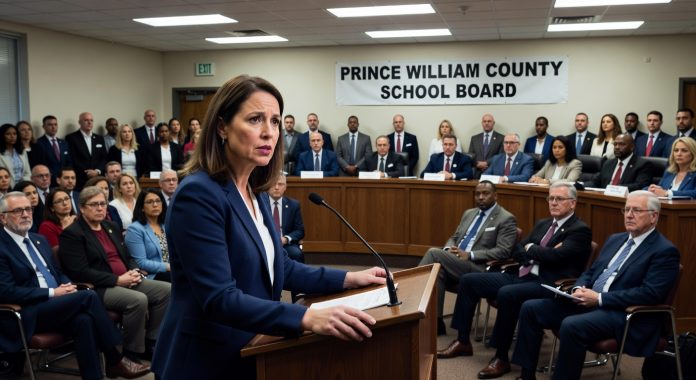
Melman-Orozco stated that the offer was made to prevent further discussion of the issues, which she claims involved failures to accommodate her child’s needs adequately. She referenced recordings of conversations with board or district officials, noting a contingency clause requiring the NDA for payment. Declining the deal, she affirmed her commitment to her First Amendment rights and her daughter’s legal protections under federal law.
The Prince William County School Board, from Prince William County, Virginia, comprises Chair Babur Lateef (at-large), Deshundra Jefferson (at-large), Jennifer Jay (District 1), Alice Gersten (District 2), and representatives from other districts including the Woodbridge, Potomac, and Gainesville areas. The board oversees one of Virginia’s largest school districts, serving over 90,000 students amid rapid population growth.
According to Melman-Orozco’s account, district officials expressed concerns over publicity, with one allegedly stating the matter was not secret but seeking to limit disclosures. She criticized the allocation of funds toward legal defense rather than corrective actions, estimating over $500,000 spent on attorneys. Specific mentions included interactions involving figures like Willie Deutsch, amid claims of administrative shortcomings and interpersonal board tensions.
This testimony occurs against a backdrop of broader challenges in Prince William County Schools, including budget debates with the Board of Supervisors. Recent public hearings saw teachers urging supervisors to maintain or increase taxes for education funding, while supervisors proposed property tax reductions. Chair Lateef has voiced positions on state legislation like collective bargaining expansions, highlighting tensions between school needs and taxpayer relief.
Melman-Orozco emphasized the human impact, stating the focus should be on aiding students rather than litigation. She recounted offers and responses, including admissions of recordings and reluctance to settle publicly. No immediate response from the board was available following the meeting, though such matters often involve ongoing legal reviews.
Prince William County’s education system navigates complex demands, from special education compliance to fiscal planning amid data center revenue booms. The district’s handling of ADA and Individuals with Disabilities Education Act (IDEA) obligations remains under parental and regulatory scrutiny. Melman-Orozco’s claims, if substantiated by her recordings, could prompt formal inquiries into expenditure practices and policy adherence.
Public testimony periods allow stakeholders to voice concerns directly to elected officials, fostering transparency. This case illustrates friction between parents advocating for accommodations and administrators managing liabilities. As details emerge, including potential release of recordings, the situation may influence board policies and state oversight of local education.
The board’s composition reflects diverse district representation, with members elected to address local priorities. Ongoing developments will be monitored as they pertain to compliance, budgeting, and parental involvement in Virginia public schools.
Source: Field reports and eyewitness accounts.