
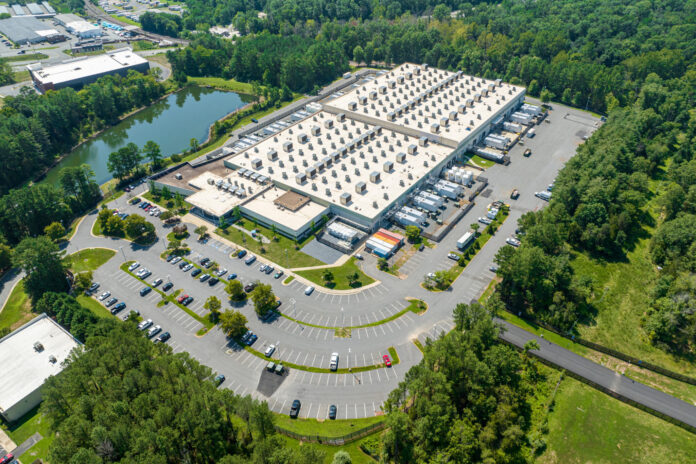
Ever since data centers started spreading across the Virginia landscape like an invasive pest, one important question has remained unanswered: How much does the industry’s insatiable demand for energy impact other utility customers? Under pressure from the SCC, this month Dominion Energy Virginia finally provided the answer we feared: Ordinary Virginia customers are subsidizing Big Tech with both their money and their health.
Dominion previously hid data centers among the rest of its customer base, making it impossible to figure out if residents were paying more than their fair share of the costs of building new generation and transmission lines. Worse, if data centers are the reason for burning more fossil fuels, then they are also responsible for residents being subjected to pollution that is supposed to be eliminated under the 2020 Virginia Clean Economy Act (VCEA). The VCEA calls for most coal plants in the state to be closed by the end of this year – which is not happening – and sets rigorous conditions before utilities can build any new fossil fuel plants.
Dominion’s 2023 Integrated Resource Plan (IRP), filed a year and a half ago, projected steep increases in energy demand and the cost of electricity. The utility asserted that for reliability purposes it needed to keep coal plants operating, build new methane gas generating units without meeting the VCEA’s conditions, and add small nuclear reactors beginning in 2034.
Once again, Dominion’s energy plan falls short. This time, the SCC isn’t having it.
Dominion’s failure to file a plan that complied with the VCEA led to an unusual stalemate at the SCC, with the IRP neither approved nor rejected. Ignoring the foul-weather warning, Dominion filed a similarly-flawed 2024 IRP in October. None of the modeled scenarios showed coal plants closing, none met the energy efficiency requirements set by law, and all proposed building new gas and nuclear reactors, with the first small nuclear plant now pushed off to 2035.
Neither of the two filings separated out the role of data centers in driving the changes.
Even before the 2024 IRP was filed, though, the SCC directed the utility to file a supplement. It was obvious the IRP would project higher costs and increased use of fossil fuels. How much of that, the SCC demanded to know, is attributable to data centers?
A lot, as it turns out. Though Dominion continues to obfuscate key facts, the document it filed on November 15 shows future data center growth will drive up utility spending by about 20%. Dominion did not take the analysis further to show the effect on residential rates.
The filing also shows that but for new data centers, peak demand would actually decrease slightly over the next few years, from 17,353 MW this year to 17,280 MW in 2027, before beginning a gentle rise to 17,818 MW in 2034 and 18,608 MW in 2039.
In other words, without data centers, electricity use in Dominion territory would scarcely budge over the next decade. Indeed, the slight decrease over the next three years is especially interesting because near-term numbers tend to be the most reliable, with projections getting more speculative the further out you look.
Surprised? You’re not alone. We’ve heard for years that electric vehicles and building electrification will drive large increases in energy demand. When Dominion talks about the challenges of load growth, it cites these factors along with data centers, suggesting that ordinary people are part of the problem. We’re not.
Decreasing demand is a testament to the profound effect of energy efficiency, as advances in things like lighting, heat pumps and other appliances allow consumers to do more with less. Presumably, the electrification of transportation and buildings will eventually outpace gains in efficiency – no doubt reflected in the projections for slightly increasing demand over the 2030s – but the effect is still modest. Electrification is not to blame for demand growth; data centers are.
In a future without new data centers, there should be no reason for Virginia’s energy transition to get off track. Solar, offshore wind and battery storage could increasingly displace fossil fuels, clean our air and bring down greenhouse gas emissions at an orderly pace.
At least, that’s the intuitive result, though Dominion fights hard to counter it. The new filing is supposed to show what a VCEA-compliant plan would look like without data centers, but it retains assumptions from its IRPs that skew the results in favor of fossil fuels. These include limiting energy efficiency and artificially capping the amounts of solar and storage that its computer model could select. Obviously, if you won’t invest in low-cost energy efficiency and solar, you need more of something else.
Dominion’s computer model also doesn’t choose offshore wind in spite of the fact that the 2,600-MW Virginia Coastal Offshore Wind project is under construction. No doubt the higher cost of offshore wind is responsible for this counter-factual omission, but again, leaving it out requires that something else be selected. Nuclear similarly doesn’t make the cut due to cost.
By limiting or eliminating all zero-carbon options, Dominion would like you to conclude that, with or without data centers, it “needs” more gas plants.
There are other reasons to be skeptical of this manufactured result. As with the 2024 IRP itself, Dominion does not appear to have incorporated the social cost of carbon in its supposedly-VCEA-compliant plan, a mandatory consideration for any new fossil fuel generation. It’s also worth noting that Dominion will once again have to buy carbon emission allowances to run its coal and gas plants now that a court has nullified Gov. Glenn Youngkin’s illegal withdrawal of Virginia from the Regional Greenhouse Gas Initiative (RGGI). (Youngkin has vowed to appeal.)
On the other hand, President-elect Donald Trump and Republicans in Congress seem likely to overturn new EPA regulations tightening pollution standards for fossil fuel plants. That would make fossil fuels appear cheaper by shifting costs onto residents in the form of worse health outcomes and climate-related weather disasters.
In addition to showing what the energy mix might look like without data centers, the SCC directed Dominion to identify which of its approximately 200 planned transmission projects were needed solely because of data centers. The 4-page table in Dominion’s supplemental filing reveals that about half of the projects are solely data center-driven, with two or three dozen more serving a mix of customers that includes data centers. I tried to add up the numbers but lost track at a billion dollars’ worth of projects needed solely for data centers – and I was still on the second page.
There is one more caveat to keep in mind. Since the SCC’s order applied only to future growth, Dominion’s new numbers don’t show the cost and energy impact of data centers in operation today. Data centers already make up a quarter of Dominion’s sales, and that growth was the main reason the utility pivoted back to fossil fuels in its 2023 IRP.
Still, most of the data center growth lies ahead of us, as does Dominion’s plans for new fossil fuel and nuclear generation. With state leaders avidly chasing more data centers in the name of economic development, ordinary Virginians are left to watch the assault on their energy supply, their water, and their environment and wonder: Is anyone going to fix this?