
The Fairfax County School Board comprises 12 members: Sandy Anderson, Chair, Springfield District; Karl Frisch, Providence District; Melanie Meren, Hunter Mill District; Robyn Lady, Vice Chair, Dranesville District; Seema Dixit, Sully District; Ricardy Anderson, Mason District; Tom Dannan; Marcia St. John-Cunning; Mateo Dunne, Mount Vernon District; Kyle McDaniel; Ryan McElveen; and Ilryong Moon. The board oversees Fairfax County Public Schools, Virginia’s largest district serving over 180,000 students with an annual budget exceeding $4 billion.
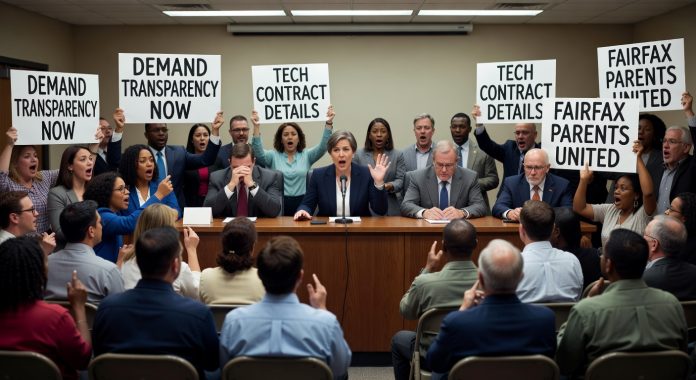
Public commenters, including parents, urged sharing of details during the meeting, reinforcing calls for openness on expenditures. The board member emphasized that public forums exist precisely for such discussions, questioning the timing and process of handling the contract information. This occurred amid ongoing debates about school finances, including high per-pupil spending, enrollment declines, and performance metrics where significant portions of schools are identified as underperforming by state standards.
Fairfax County Public Schools has faced scrutiny for various financial decisions, such as substantial legal expenditures, staff position changes, and technology implementations. The district’s tech contracts are part of broader efforts to modernize education infrastructure, though specifics on this particular agreement remain pending public release. The board has navigated challenges including a drop in enrollment, teacher position reductions, and state assessments showing proficiency gaps in core subjects.
The meeting reflects persistent discussions on governance and accountability in public education. Board members and administrators cited logistical constraints, with the late arrival of data preventing full presentation that evening. The promise of follow-up materials by Friday aims to address the queries raised. Such interactions highlight the role of public meetings in Virginia, governed by open meetings laws requiring transparency in decision-making processes.
Contextually, Fairfax County Public Schools operates in a high-cost region, with expenditures per student surpassing many peers, while grappling with issues like administrative staffing levels and academic outcomes. Recent board actions have included calendar adjustments, boundary redistricting, and policy reviews on discipline and holidays. The tech contract discussion fits into ongoing budget oversight, where vendors and costs are routinely evaluated.
Observers note that these exchanges provide insight into internal dynamics, with board members balancing immediate public demands against operational timelines. Parents and stakeholders continue to engage actively, as evidenced by attendance and comments. The board’s next steps on the contract, including the Friday update, will likely inform future transparency practices. As the district prepares for upcoming fiscal planning, such moments underscore the importance of clear communication between elected officials, staff, and the community served.
This incident is part of a series of public deliberations on school operations, from leadership appointments to resource allocation. Fairfax County residents, through their elected representatives, maintain vigilance on how public funds support educational goals amid evolving needs.
Source: Field reports and eyewitness accounts.
NEWSLETTER SIGNUP
Subscribe to our newsletter! Get updates on all the latest news in Virginia.