
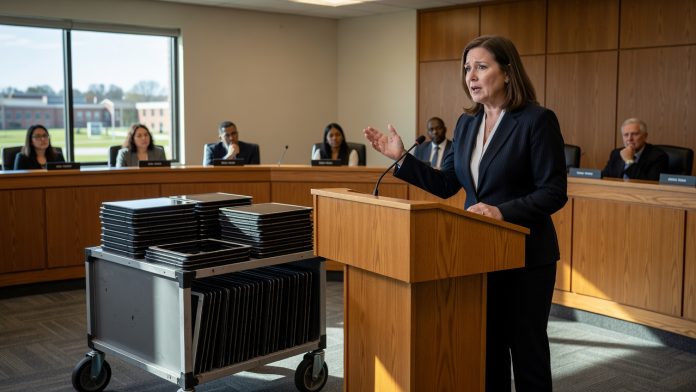
Lauren Shernoff, serving on the Loudoun County School Board, has expressed concerns regarding the amount of screen time experienced by primary students in the district. She recommends the use of device carts as an alternative to issuing individual 1:1 laptops to these young learners. The suggestion seeks to manage technology integration more carefully within Loudoun County schools. The Loudoun County School Board, which includes members such as Lauren Shernoff, handles educational policies for the county.
The proposal addresses potential effects of prolonged device exposure on early childhood education. Primary grades in Loudoun County focus on building basic skills where excessive screens may interfere with other learning approaches. School officials evaluate various methods to incorporate technology effectively. This discussion occurs as part of broader efforts to optimize resources and student experiences.
Considerations for Technology in Primary Education
Device carts provide shared access to laptops only during designated activities, limiting overall daily use. In Loudoun County, this could help maintain a balance between digital tools and traditional instructional strategies. Educators note that young students often thrive with varied activities including paper-based work and group discussions. The approach allows flexibility while controlling the extent of screen engagement.
School board deliberations in Loudoun County involve weighing the benefits of technology against observed classroom dynamics. Shernoff’s input contributes to these conversations about appropriate levels of device availability. Data from educational studies on screen time influences such policy reviews. The board examines how different configurations affect student engagement and academic progress.
Potential Outcomes of Cart-Based Device Systems
Adopting device carts might streamline maintenance and distribution processes for Loudoun County schools. Teachers could plan lessons with technology as a supplement rather than a default resource. This setup supports monitoring of usage to align with age-appropriate guidelines. Community input remains an important factor in refining these educational strategies.
The Loudoun County School Board continues to assess technology policies to meet the needs of all students. Shernoff’s advocacy highlights one perspective on optimizing primary grade environments. Further reviews may include input from parents, teachers, and administrators. Decisions aim to support effective learning across the district.
Ongoing evaluations ensure that any changes to device policies reflect current best practices. In Loudoun County, the focus stays on delivering comprehensive education that prepares students for future success. The board monitors implementation to adjust as needed based on results. This measured approach allows for informed adjustments over time.
Email the School Board At:
April Chandler (Chair, Algonkian District) april.chandler@lcps.org,
Anne Donohue (Vice Chair, At-Large) anne.donohue@lcps.org,
Deana Griffiths (Ashburn District) deana.griffiths@lcps.org,
Ross Svenson (Broad Run District) ross.stevenson@lcps.org,
Kari LaBell (Catoctin District) kari.labell@lcps.org,
Jon Pepper (Dulles District)\ jonathon.pepper@lcps.org,
Lauren Shernoff (Leesburg District) lauren.shernoff@lcps.org,
Sumera Rashid (Little River District) sumera.rashid@lcps.org,
Amy Riccardi (Sterling District) amy.riccardi@lcps.org,