
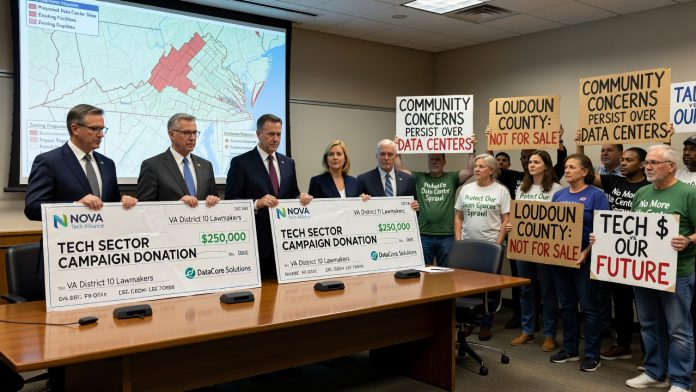
Northern Virginia has emerged as the world’s largest data center market, with facilities expanding significantly in counties such as Loudoun. Local residents have expressed opposition to additional development of these large-scale operations near residential areas. Three Democratic House members from the region have received campaign contributions from individuals and groups connected to companies involved in data centers and artificial intelligence infrastructure.
Expansion of Data Centers in the Region
Loudoun County currently operates 293 data centers and has plans for 154 more. The total footprint in the county exceeds 53 million square feet, representing substantial growth over the past five years. This development has positioned the area as a key hub for technology infrastructure serving national needs.
Polling indicates a decline in public support for data centers. A Washington Post-Schar School Poll showed approval falling from 69 percent in 2023 to 35 percent in 2026. Residents cite impacts on neighborhoods and resources as factors in their views.
Details on Contributions Received
Rep. Suhas Subramanyam has obtained $11,000 from Alphabet Inc. employees during the 2026 cycle, with half from Vinton Cerf. An additional $2,000 arrived from Amazon’s political action committee. Google maintains major investments in the state, including land acquisitions in Loudoun for cloud facilities.
Rep. James Walkinshaw accepted $15,000 from the SAIC political action committee. Further amounts over $10,000 originated from executives at Amazon, Google, and Microsoft along with their respective political action committees. These funds support campaigns in districts central to the data center activity.
Statements from the Representatives
Subramanyam has proposed a national strategic plan for data centers and expressed caution regarding unchecked expansion. He holds an endorsement from a super PAC network advocating for artificial intelligence advancement. Walkinshaw has indicated support for siting data centers in industrial zones and has called for companies to bear the full electricity expenses of their operations.
These approaches reflect efforts to address both economic opportunities and local considerations. The contributions coincide with ongoing discussions about the appropriate scale and location of future facilities.
Context of Resident Opposition
Community resistance has grown as data centers proliferate in Northern Virginia. Companies involved have outlined plans for responsible development and community investments. The situation illustrates connections between political funding and policy debates surrounding technology infrastructure growth.