
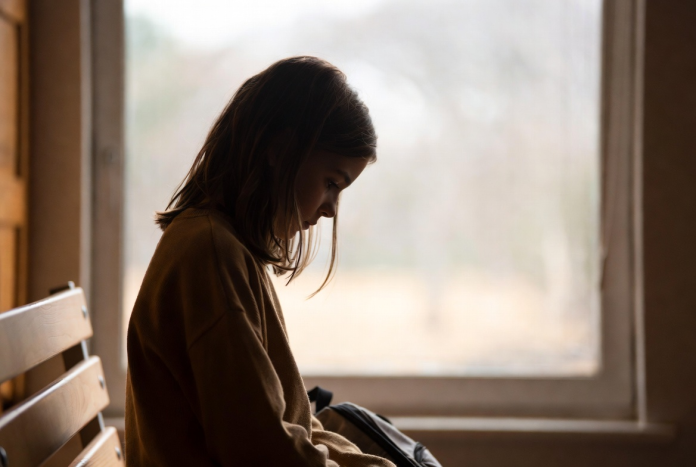
Maya is thirteen years old and already exhausted by the gap between who she is and what the school day demands of her.
She is bright. She wants to do well. After one of her hardest moments she wrote an apology, asked for alternatives, and said she wanted to be a good leader. Yet the same nervous system that makes her capable of insight also leaves her vulnerable to noise, distraction, impulsivity, and sudden emotional storms. Diagnosed with ADHD Combined Type and later with Disruptive Mood Dysregulation Disorder, Maya experiences chronic boredom, sensory overstimulation, trouble with executive functioning, and outbursts that feel bigger than the moment that triggered them. When the classroom gets loud, when directions pile up, when her medication is still settling or her mental health is fragile, the day can unravel quickly.
Instead of consistent specialized support, the complaint alleges, she has repeatedly met discipline.
Names in this account have been changed to protect the identity of the minor involved.
Maya’s experience is one more detailed account in a lengthening record of Virginia families of children with disabilities who say the system designed to protect their educational rights keeps answering distress with punishment. All Virginia News has documented parent after parent standing at school board microphones in Arlington, Prince William County, and elsewhere describing the same cycle: plans that exist on paper but not in practice, behavioral incidents met with suspension rather than assessment, and a deep skepticism that the process will ever truly see their child. Independent state reports have already recorded the widespread perception that special education hearing systems lean toward school divisions. If Virginia’s government continues to treat these warnings as background noise, the cost will be measured in lost instructional months, deeper mental health crises, more federal and administrative litigation, and children whose most urgent needs remain unmet while the calendar keeps turning.
It is against this backdrop that Maya’s mother filed an expedited due process complaint against Prince William County Public Schools.
A Pattern of Discipline Over Support
According to the complaint filed May 26, 2026, Maya has a documented history of mental health needs that appeared in her school record long before formal diagnoses. In elementary school she was suspended after an incident in which she allegedly pushed a teacher while trying to leave a classroom; at that time a request to use a resource room for emotional regulation was denied. A 504 plan was later put in place, but the parent was not informed of her right to request independent educational evaluations or a full special education referral.
After returning to a large public middle school following years in a small private setting, the struggles intensified. Teachers reported difficulty following directions, talking in class, and impulsively leaving the room. A mental health breakdown at school required restraint by multiple staff members. The family adjusted medication and kept her home until she stabilized. Formal services beyond informal counselor check-ins, the complaint states, were not offered.
In January 2026 Maya received a five-day suspension for vaping. When her mother explained that Maya was emerging from a mental health crisis and had asked for help, the response was still suspension. In February she was referred again, this time for “reckless behavior creating risk of injury,” after giving money to another student. She was held in isolation for approximately two hours before her parent was notified. A ten-day suspension and disciplinary hearing followed.
A Manifestation Determination That the Family Says Failed
The mother requested a Manifestation Determination Review. The meeting was scheduled with less than twenty-four hours’ notice. According to the complaint, the guidance counselor arrived late, the team declined to meaningfully consider a detailed letter from Maya’s treating therapist explaining how ADHD symptoms affected judgment and decision-making, and the discussion centered on an alleged vape purchase rather than the actual referral language. The team found the behavior was not a manifestation of disability. No Behavior Intervention Plan was in place despite documented concerns and ongoing evaluations.
A subsequent disciplinary hearing resulted in a decision to place Maya at Independence Nontraditional School for 45 days. The family appealed. While the appeal process continued, Maya remained out of her base school, receiving only homework packets and limited weekly check-ins. By the time of the complaint she had been without regular classroom instruction since mid-February — more than two months.
Evaluations That Pointed Toward Greater Support
Private evaluations painted a clearer clinical picture. A licensed professional counselor confirmed ADHD Combined Type and described chronic difficulties with focus, sensory overstimulation, impulsivity, and emotional regulation. A comprehensive psychological evaluation by Dr. Bethany Tareen diagnosed both ADHD and Disruptive Mood Dysregulation Disorder, noting that Maya’s emotional and behavioral dysregulation exceeded what is typical of ADHD alone. The evaluator recommended an IEP, a Functional Behavior Assessment followed by a Behavior Intervention Plan, specific classroom accommodations, regular counseling support, and close home-school communication.
At an eligibility meeting in April 2026 the school team determined Maya did not require specially designed instruction. The Prior Written Notice stated that her ADHD impacts could continue to be managed through the existing 504 plan and that current emotional concerns appeared circumstantial. The family and their advocate disagreed, pointing to the private evaluations, teacher rating data showing at-risk externalizing behaviors and clinically significant anger control issues, and the long history of behavioral and mental health crises at school.
The Complaint and the Request for Expedited Relief
The due process complaint alleges that Prince William County Public Schools violated its Child Find obligations across multiple school years, failed to evaluate comprehensively, failed to conduct a proper Functional Behavior Assessment and implement a Behavior Intervention Plan, conducted a defective Manifestation Determination Review, denied a free appropriate public education, and failed to provide placement in the least restrictive environment consistent with medical recommendations. It further alleges that the 504 plan accommodations never adequately addressed executive functioning, social skills, or mental health needs.
The family seeks an expedited hearing, a finding that a free appropriate public education was denied, full reversal of the disciplinary actions, removal of the suspension from Maya’s record, 200 hours of compensatory education and therapeutic supports, a determination that the general education middle school is the appropriate setting, a prompt re-evaluation for special education eligibility, an independent educational evaluation, and an order requiring a Functional Behavior Assessment and Behavior Intervention Plan. The parent has invoked stay-put in the general education public school setting and has declined mediation.
The Larger Pattern Virginia Continues to Face
Maya’s case joins a series of detailed complaints and public testimonies that All Virginia News has been recording across the region. Parents describe children whose disabilities are documented by private clinicians yet still met primarily with discipline. They describe meetings that feel predetermined, evaluations that stop short of the supports experts recommend, and months of lost instruction while appeals crawl forward. State-commissioned reports have already flagged parental distrust of the due process system and the perception that hearing officers favor school divisions.
If Virginia’s government continues to leave these patterns unexamined, the consequences will not remain confined to individual case files. More families will be driven into administrative and federal litigation. More adolescents whose brains are still developing will spend critical months isolated from consistent instruction and peer relationships. Mental health crises will deepen. And the Commonwealth will face not only the financial and legal costs of repeated challenges but the deeper cost of having failed to build systems capable of seeing a child like Maya — bright, struggling, asking for help — as someone who needs support rather than successive removals.
Maya is still only thirteen. She has already written apologies, asked for alternatives, and tried to return to school after crises. The complaint her mother has filed asks whether the adults charged with educating her will finally respond with the specialized instruction, behavioral supports, and least restrictive environment that her evaluations and her own experience say she needs — or whether the cycle of discipline without understanding will continue.
Email the School Board at:\r\nBabur B. Lateef, M.D. (Chairman At-Large) \u2014 blateef@pwcs.edu,\r\nRichard M. Jessie (Vice Chairman, Occoquan District) \u2014 rjessie@pwcs.edu,\r\nErica C. Tredinnick (Brentsville District) \u2014 etredinnick@pwcs.edu,\ \r\nLisa A. Zargarpur (Coles District) \u2014 lzargarpur@pwcs.edu,\r\nJennifer T. Wall (Gainesville District) \u2014 jwall@pwcs.edu,\r\nTracy L. Blake (Neabsco District) \u2014 tblake@pwcs.edu,\r\nJustin David Wilk (Potomac District) \u2014 jwilk@pwcs.edu,\r\nLoree Y. Williams (Woodbridge District) \u2014 lwilliams@pwcs.edu,































