
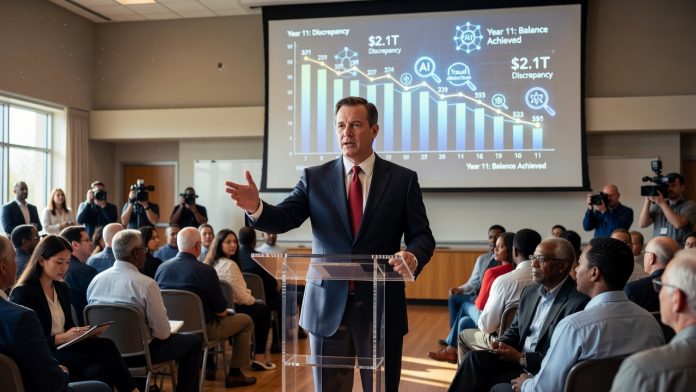
Dave Beckwith is running for a seat in Congress and has shared a specific plan to balance the federal budget over the course of 11 years. The proposal focuses on reducing fraud through the application of artificial intelligence systems. This outline has been presented in public statements associated with his campaign.
The plan references substantial financial discrepancies observed during the pandemic period. Estimates place losses from improper payments in the range of 200 to 500 billion dollars. These amounts illustrate the potential scale of savings if fraud prevention improves.
Beckwith includes provisions for addressing similar issues in tax administration as part of the overall framework. The approach involves deploying technology to monitor and verify transactions more effectively. Such steps are described as essential for achieving the stated 11-year goal.
Pandemic Losses and Fraud Patterns
Visual materials in the presentation show examples of fraud alerts on mobile devices related to government payments. These illustrations highlight real-world occurrences of suspicious activity. The candidate ties these examples to the need for enhanced detection capabilities.
Additional elements cover the handling of tax fraud to create a comprehensive response. The strategy envisions consistent use of AI across relevant federal domains. Projections suggest this could lead to cumulative savings sufficient for budget balance.
The timeline of 11 years is presented as a measurable target based on the anticipated impact of these measures. Observers note that the plan emphasizes technological solutions over traditional policy adjustments.
Broader Implications for Federal Spending
Beckwith’s outline connects fraud reduction efforts to long-term fiscal stability. The use of AI is positioned as a way to modernize existing oversight processes. This could apply to various programs that experienced elevated losses in recent years.