
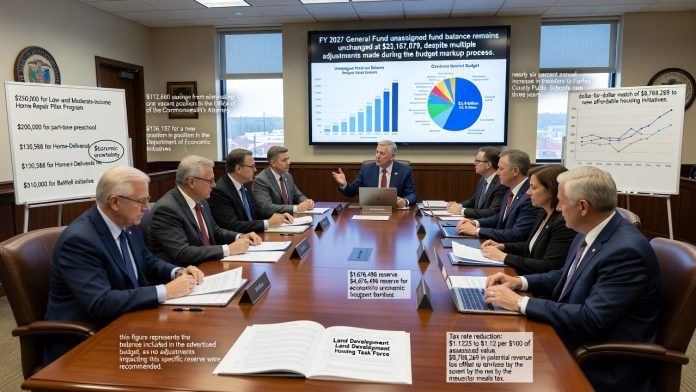
The Commonwealth of Virginia recently closed out Fiscal Year 2026 with a staggering $936.3 million general fund surplus, raising immediate red flags for fiscal conservatives across the state. This massive stockpile of excess cash was driven by a 6.7 percent growth in state revenues, translating to an additional $2.09 billion taken from the pockets of hard-working citizens. While state officials are celebrating this financial windfall, conservative watchdogs argue that such a massive surplus is clear evidence of chronic over-taxation. Taxpayers are essentially being forced to overfund a government apparatus that consistently refuses to trim its own bloated budget.
Instead of returning this excess revenue to the citizens who earned it, the adopted budget incorporates $585.5 million of the surplus into the Fiscal Year 2027 starting balances. State bureaucrats have justified this maneuver by claiming the unassigned fund balances are necessary to maintain structural balance in the upcoming budget cycle. However, using a rainy day reserve to plug future spending holes simply masks underlying fiscal irresponsibility and avoids the hard work of actual budget reduction. True structural balance should be achieved by cutting wasteful programs and eliminating government fraud, rather than hoarding overcharged tax dollars.
Runaway Revenue and the Taxpayer Burden
The $2.09 billion increase in state revenues compared to Fiscal Year 2025 paints a troubling picture of a rapidly expanding state government that demands more from its citizens each year. When revenue grows at nearly seven percent while everyday Virginians struggle with inflation and economic uncertainty, it becomes obvious that the state is taking far too much. Fiscal conservatives maintain that when the government collects nearly a billion dollars more than it needs to operate, the moral imperative is to issue immediate tax rebates or enact permanent tax cuts. Allowing the state to keep these funds only incentivizes further overspending and the creation of new, unnecessary bureaucratic programs.
Governor Abigail Spanberger recently addressed the surplus, emphasizing a commitment to what she described as fiscal responsibility and targeted investments. The administration plans to funnel these excess funds into education, public safety, and economic development initiatives across the Commonwealth. While these areas are undeniably important core functions of government, they are frequently used as catch-all categories to justify runaway spending and mask administrative bloat. Conservatives rightly question how much of this new investment will actually reach the classroom or the police precinct, versus being lost to administrative waste and inefficient state contracts.
Protecting Against Waste and Overspending
Hoarding a massive $585.5 million unassigned fund balance creates a dangerous temptation for lawmakers who are always looking for ways to expand the size and scope of government. Unassigned funds often serve as a slush fund for pet projects, leading directly to the kind of waste, fraud, and abuse that plagues bloated state agencies. To protect taxpayer money, the Virginia General Assembly must implement strict oversight mechanisms to ensure these banked reserves are not squandered on recurring expenses. Without rigid spending caps, the government will inevitably grow to consume the entirety of the surplus, leaving taxpayers on the hook for even higher costs in the future.
The concept of utilizing unassigned fund balances to maintain structural balance is a budgetary gimmick that fundamentally contradicts conservative fiscal principles. If the state cannot balance its ongoing obligations with its regular, predictable revenue streams, then the state is simply spending too much money. Relying on surplus cash to prop up future budgets allows politicians to avoid making necessary cuts to underperforming departments and redundant services. A responsible government must align its expenditures with its baseline income, demanding efficiency and accountability from every single state agency rather than relying on over-taxation to balance the books.
A Path to Genuine Fiscal Conservatism
To truly serve the residents of Virginia, lawmakers must pivot away from a culture of government expansion and embrace a philosophy of rigorous budget reduction. The discovery of a $936.3 million surplus should trigger immediate legislative action to lower income tax rates and reduce the overall tax burden on families and businesses. By shrinking the financial footprint of the state, Virginia can foster a more robust private sector economy where individuals determine how best to spend their own money. Slashing wasteful spending and returning surplus funds to the taxpayers is the only guaranteed method to prevent future government overreach.
Ultimately, the financial health of the Commonwealth should not be measured by the size of its government reserves, but by the financial well-being of its citizens. The decision to bank $585.5 million for Fiscal Year 2027 represents a missed opportunity to provide meaningful financial relief to hard-working Virginians. Moving forward, conservative leaders must demand that future budgets are strictly limited to essential services, vigorously rooting out fraud and unnecessary expenditures at every level. Only through disciplined spending reductions and a fundamental respect for taxpayer money can Virginia achieve a truly sustainable and moral fiscal policy.