
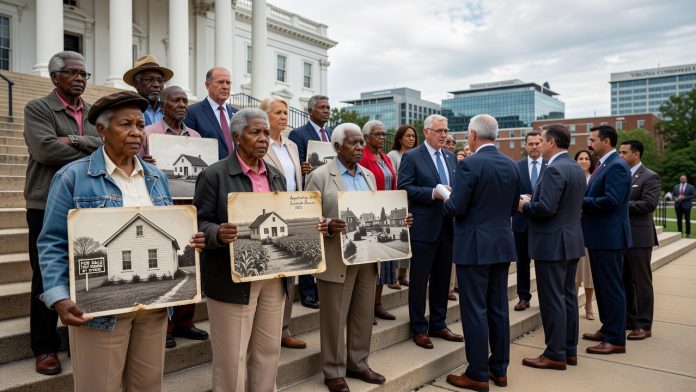
Virginia Democrats are advancing proposals for reparations aimed at families who lost property to eminent domain during expansions at Christopher Newport University and Virginia Commonwealth University. The measures focus on historical land acquisitions that occurred over several decades. These developments have prompted renewed discussion about the effects of institutional growth in the state.
Details of CNU Land Acquisitions
Christopher Newport University was established in 1961 as Christopher Newport Junior College. Most land acquisitions took place in the Shoe Lane area between the 1960s and 1990s. The affected zones included Shoe Lane, Moore Lanes, Warwick Boulevard, and Prince Drew Road.
More than three dozen families faced displacement in connection with these takings. The university relied on eminent domain combined with sales managed by its Real Estate Foundation and Education Foundation. These processes reshaped the geographic and demographic character of the region.
VCU Expansion and Related Acquisitions
Virginia Commonwealth University originated in 1838. Land and property acquisitions have involved the Carver neighborhood along with zones near Shockoe Bottom and New Hill. The VCU Real Estate Foundation and the Capital Assets and Real Estate team oversaw many of these transactions.
Acquisitions continued into later periods including the 1980s and 1990s. The university facilitated sales following initial eminent domain actions in various Richmond areas. This approach supported campus development over an extended timeline.
Reparations Initiative and Context
Democratic proposals seek to provide reparations to descendants of those impacted by the eminent domain actions. The initiative highlights the human costs associated with university expansions in Virginia. Affected communities in both Newport News and Richmond experienced significant changes as a result.
The discussions center on land losses that occurred in the Shoe Lane area for CNU and multiple neighborhoods for VCU. These events involved a combination of eminent domain and private sales. The proposals aim to recognize the long-term consequences for families and local areas.
Ongoing Developments in Virginia Politics
The reparations effort reflects broader conversations about eminent domain practices in the state. Both universities continue to operate on the properties acquired through these historical processes. The focus remains on documenting the sequence of events and their effects on residents.