RICHMOND, Va. — In the 2024 and 2025 Virginia legislative sessions, Republican lawmakers, backed by Governor Glenn Youngkin, have vigorously pursued an agenda to expand school choice and charter schools, aiming to empower parents and address educational disparities. However, these efforts have been consistently thwarted by the Democratic-controlled General Assembly, preventing key bills from reaching the governor’s desk for approval.
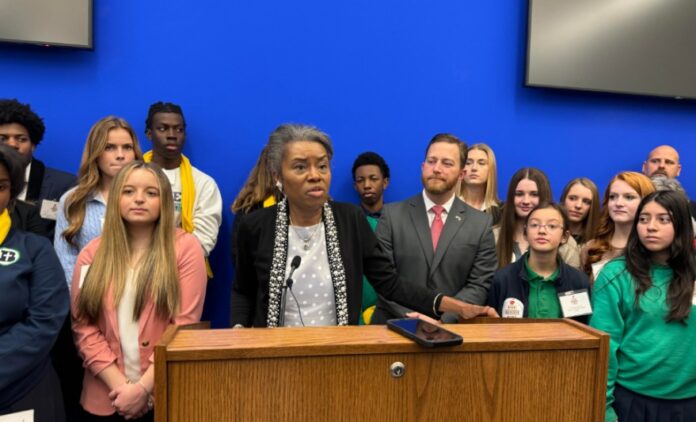
Republicans argue that school choice, including charter schools and scholarship programs, is essential to providing families—particularly those in underserved communities—with access to quality education tailored to their children’s needs. “Parents deserve the freedom to choose the best educational environment for their kids,” said Lt. Gov. Winsome Earle-Sears, a vocal advocate for school choice. “Our bills are about equity, opportunity, and ensuring no child is trapped in a failing school.”
2024 Legislative Session: A Push for Parental Empowerment
In the 2024 session, Republicans introduced several bills to advance school choice, emphasizing the need to recover from pandemic-related learning losses and address declining Standards of Learning scores. One prominent proposal, sponsored by Del. Glenn Davis (R-Virginia Beach), aimed to establish education savings accounts (ESAs). These accounts would allow parents to use a portion of per-pupil state funding for private school tuition, tutoring, or other educational expenses. The bill targeted students in low-income or minority communities, providing alternatives to underperforming districts.
Supporters, including Earle-Sears, framed the legislation as a modern civil rights issue, likening it to the landmark Brown v. Board of Education decision. “This is about giving every child a chance to succeed, regardless of their zip code,” Davis said at a press conference. Despite strong Republican backing and public support from groups like the Family Foundation of Virginia, the bill was defeated in committee by Democrats, who argued it would divert funds from public schools.
Another Republican-sponsored bill sought to streamline the charter school authorization process. Currently, Virginia law requires local school boards to approve charter applications, often leading to rejections due to concerns about competition with traditional public schools. The legislation, also championed by Davis, proposed allowing denied charter applications to appeal to the state Board of Education, creating a pathway for innovative schools to open. This bill, too, was killed in a Senate committee controlled by Democrats.
2025 Legislative Session: Scholarships and Continued Resistance
In the 2025 session, Republicans renewed their efforts with the Virginia Opportunity Scholarship Grant Program, a $50 million initiative to provide scholarships for private school tuition and other educational expenses. Sponsored by Sen. Emily Jordan (R-Suffolk) and Del. Mike Cherry (R-Colonial Heights), the program aimed to address achievement gaps, particularly for Black and Brown students, and boost literacy and math proficiency rates post-COVID. “This is not an attack on public schools—it’s an enhancement for families who need options,” Jordan emphasized.
Governor Youngkin, in his final year in office, toured the state to rally support, arguing that the scholarships complemented record K-12 public school investments. “This is an ‘and’ moment, not an ‘or’ moment,” Youngkin said, noting that similar programs exist in neighboring states like Maryland and North Carolina. However, Democrats, led by Senate President Pro Tempore Louise Lucas, rejected the proposal, asserting that it was a veiled attempt to fund private school vouchers at the expense of public education. “We will never agree to take money from public schools,” Lucas posted on social media. The bill failed to advance past Democratic-controlled committees.
Additionally, Republicans pushed for expanded lab schools—public schools partnered with higher education institutions to offer specialized curricula in fields like technology and teaching. While Youngkin successfully allocated funding for lab schools in prior years, a 2025 bill to allow private businesses to establish lab schools was met with resistance. Democrats, wary of blurring lines with charter schools, voted down the legislation, citing concerns about lack of oversight clarity.
Democratic Opposition and Republican Frustration
Democrats have consistently argued that school choice initiatives undermine public education by reallocating state funds to private or charter schools. They point to the state’s obligation to fully fund the Standards of Quality, which requires an estimated $365 million additional investment for the 2023-2024 school year alone. “We can’t afford to shift investments to voucher programs” said a spokesperson for Fund Our Schools Virginia.
Republicans counter that their proposals do not reduce public school funding but rather provide targeted support for families in need. They highlight Youngkin’s broader education agenda, including the new School Performance and Support Framework, which aims to better identify struggling schools and provide evidence-based interventions. “Democrats are defending a status quo that’s failing too many kids,” said Republican Governors Association spokesperson Courtney Alexander.
Looking Ahead: A Continued Fight
With Democrats maintaining narrow majorities in the Senate (21-19) and House of Delegates (51-49), Republicans faced an uphill battle during the 2025 legislative session. Youngkin, term-limited and unable to run again, has endorsed Lt. Gov. Earle-Sears for the 2025 gubernatorial race, signaling that school choice will remain a cornerstone of the Republican platform.
The defeat of these Republican-sponsored bills represents a missed opportunity to innovate and address persistent educational challenges, GOP leaders argue. However, with the upcoming election in the fall, the possibility exists for Republicans to take control of the legislature and implement some of these ideas that promise to improve educational opportunities for minorities and underserved communities. “The work is not done,” Earle-Sears said, vowing to continue the fight for parental rights and educational freedom.