
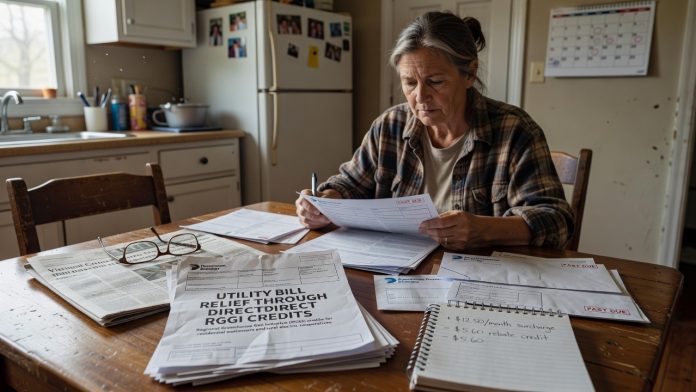
Virginia taxpayers and utility customers are bracing for the fiscal impacts of the state’s forced reentry into the Regional Greenhouse Gas Initiative under the upcoming state budget. Governor Abigail Spanberger recently outlined a legislative plan to return a portion of the revenue collected from this controversial carbon cap-and-trade program directly to everyday consumers. While the administration touts this maneuver as much-needed utility bill relief, fiscal conservatives warn that the program operates as a hidden tax that artificially inflates energy costs before offering a meager partial refund. Hardworking families are effectively being forced to fund a massive state bureaucracy under the guise of environmental progress, only to receive a fraction of their own money back.
The Mechanics of the RGGI Credit
Under the newly structured budget provisions for the coming fiscal year, exactly forty-five percent of all revenue collected from the climate initiative will be remitted directly to utility companies. Phase I and Phase II utilities, such as Dominion Energy and Appalachian Power Company, along with various rural electric cooperatives, are strictly mandated to distribute these funds as a direct financial credit to eligible customers. This state-mandated rebate will specifically target residential users, Small General Service businesses, and church classes to help offset the steep financial burdens associated with the mandated clean energy transition. Customers will eventually see this partial refund explicitly labeled as an “RGGI Credit” on their monthly utility statements, though critics argue the label masks the true cost of the program.
State officials estimate that this newly implemented credit will reduce electricity bills for every Virginia household by approximately eight percent, translating to roughly twelve dollars per month in projected savings. Governor Abigail Spanberger defended the controversial program by stating that withdrawing from the initiative previously did not lower energy costs for hardworking citizens across the commonwealth. She further noted that recent budget amendments make explicit that all residential and small business customers, including those served by rural cooperatives, are fully eligible for this direct financial relief. Despite these political assurances, economic conservatives argue that giving ratepayers twelve dollars back from a program that inherently raises baseline energy prices is merely a deceptive illusion of true savings.
Bureaucratic Waste and the Missing Funds
The most glaring issue for budget hawks is the remaining fifty-five percent of the collected revenue, which will completely bypass the citizens who ultimately fund the program through higher utility rates. Instead, the majority of these extracted funds will be distributed to state agencies in accordance with the Code of Virginia, funneling millions of taxpayer dollars into government-directed environmental projects. This massive diversion of ratepayer money raises serious conservative concerns about bureaucratic bloat, unchecked state spending, and the high potential for systemic fraud and waste. When the government extracts wealth from its citizens only to keep the lion’s share for experimental administrative programs, taxpayers are left bearing the heavy financial burden of a rapidly expanding administrative state.
Virginia initially joined the regional climate pact in the year prior to the election of former Governor Glenn Youngkin, who subsequently withdrew the commonwealth from the costly agreement to protect local consumers. The conservative effort to shield ratepayers from these mandatory carbon compliance costs was ultimately thwarted when a judicial panel ruled the executive withdrawal was unlawful. Consequently, the upcoming state budget officially mandates Virginia’s reentry into the restrictive program effective July of the coming fiscal year. This judicial intervention effectively forces the state back into a complex regulatory scheme that many fiscal conservatives view as an unnecessary and burdensome drain on the local economy.
Demanding True Fiscal Responsibility
The implementation of this complex rebate system will require significant and costly oversight from both the Department of Environmental Quality and the State Corporation Commission. State budget language strictly dictates that utility companies must distribute the received funds in a manner approved by the commission to ensure the money reaches Virginia customers exclusively. However, adding layers of bureaucratic management to oversee the collection and redistribution of these funds inevitably incurs massive administrative costs that quietly eat into the promised consumer savings. Fiscal conservatives consistently argue that eliminating the program entirely would be a far more efficient way to save taxpayer money and streamline bloated state government operations.
True utility bill relief cannot be achieved by taxing citizens heavily and subsequently returning less than half of their own money in the form of a heavily managed government credit. Lawmakers who are genuinely committed to fiscal responsibility must rigorously scrutinize the remaining fifty-five percent of these climate revenues to identify and eliminate wasteful spending within state environmental agencies. By demanding greater transparency and aggressively cutting unnecessary bureaucratic overhead, Virginia can finally protect its small businesses and families from runaway government overspending. Ultimately, the most effective strategy for permanently lowering utility costs is to foster a free-market energy sector unburdened by costly regional mandates and excessive state taxation.