Fiscal Concerns Over Ballooning Education Budget
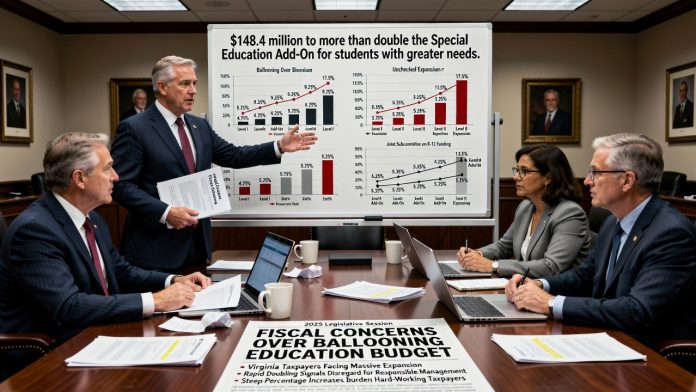
Virginia taxpayers are facing another massive expansion of state spending as lawmakers push a staggering $148.4 million budget increase over the upcoming biennium for the Department of Education. This new funding proposal aims to more than double the Special Education Add-On, a program that was only just established during the 2025 legislative session. Fiscal conservatives are raising immediate alarms about the rapid growth of this spending initiative and the potential for severe bureaucratic waste. When the government introduces a new spending category and immediately doubles its size the following year, it signals a complete disregard for responsible budget management.
The massive financial package specifically targets Direct Aid to Public Education by dramatically increasing per-pupil funding rates for special education students. Under the proposed budget, the add-on rates will jump from 4.75 percent to 9.25 percent for Level I students, while Level II student funding will skyrocket from 5.25 percent to an astounding 17.5 percent. Such steep percentage increases over a single budget cycle represent exactly the kind of unchecked government spending that places an undue burden on hard-working taxpayers across the commonwealth. Lawmakers must recognize that consistently raising funding percentages without demanding corresponding performance metrics is a recipe for fiscal disaster.
The Danger of Unchecked Bureaucratic Expansion
Lawmakers are justifying this massive expenditure by claiming it provides local school systems with greater flexibility in determining how to allocate resources. However, without stringent financial oversight and strict accountability measures, flexible funding pools often become breeding grounds for systemic waste and financial mismanagement at the district level. Taxpayers deserve concrete assurances that these millions will directly serve educational needs rather than padding administrative salaries or funding redundant bureaucratic programs. Handing over nearly $150 million in highly flexible funds to local districts practically invites the kind of financial abuse that conservative budget hawks constantly fight against.
Furthermore, creating and then immediately doubling a massive funding stream within a single year sets a dangerous precedent for the state budget. The Special Education Add-On was originally created in response to the Joint Subcommittee on K-12 funding, yet it is already ballooning well beyond its initial fiscal footprint. Conservative advocates warn that this rapid expansion reflects a troubling trend of throwing taxpayer dollars at educational challenges instead of demanding operational efficiency and measurable results from existing programs. If this trajectory continues, the state will find itself locked into an unsustainable spending pattern that inevitably leads to higher taxes.
Additional Expenditures and Program Redundancies
In addition to the massive general add-on, the budget includes another $10.0 million in fiscal year 2027 specifically designed to expand the Support for Students with Intense Support Needs Application. This secondary program, known as SISNA, is intended to support students with the most complex educational requirements within the public school system. Supporters argue that this specific funding targets the same students who are typically referred to expensive private day school placements under the Children’s Services Act. While the intention to keep students in local public schools sounds reasonable, the execution of this funding mechanism requires intense scrutiny to prevent overlapping expenditures.
While reducing reliance on costly private day school placements is a laudable fiscal goal, funding multiple overlapping programs often leads to severe administrative bloat. The Department of Education must prove that this $10 million SISNA expansion will actually result in corresponding budget reductions within the Children’s Services Act. If the state simply funds both avenues simultaneously without cutting costs elsewhere, taxpayers are essentially paying double for the exact same educational services. True fiscal responsibility dictates that new program funding must be offset by definitive cuts to the expensive programs it is designed to replace.
Demanding Accountability for Taxpayer Dollars
As the 2026-2028 biennium budget takes shape, fiscal watchdogs are urging lawmakers to implement strict auditing requirements for these newly allocated special education funds. Local school boards must be required to publicly report exactly how this flexible money is being spent to prevent the funds from disappearing into general administrative overhead. True conservative governance demands that every single dollar extracted from the public is treated with the utmost respect and rigorous oversight. Without mandatory financial tracking, the state risks losing millions of dollars to the very fraud and waste that continues to plague large government bureaucracies.
Ultimately, ballooning the state education budget by nearly $150 million without demanding structural reforms is a massive disservice to Virginia taxpayers. Lawmakers must prioritize reducing overall government spending and eliminating wasteful redundancies before asking citizens to foot the bill for massive program expansions. If the state wants to truly help students, it must first ensure its financial house is in order by rooting out fraud and maximizing the efficiency of every existing taxpayer dollar. Conservative voters expect their elected representatives to guard the state treasury fiercely, rather than rubber-stamping every expensive proposal that comes out of the Department of Education.