
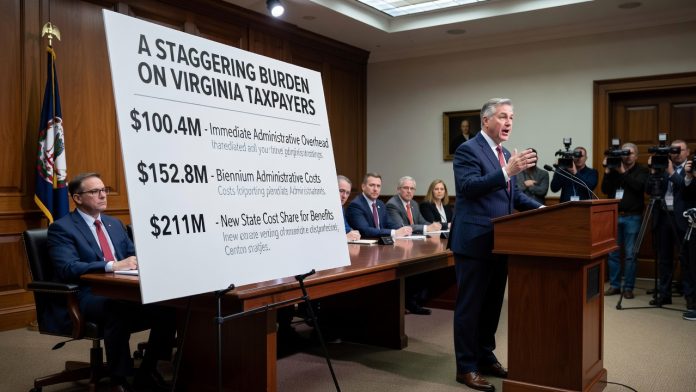
Virginia taxpayers are facing a massive new financial burden as state lawmakers push to allocate $100.4 million to cover administrative costs for welfare programs. This staggering sum is intended to replace federal support for the Supplemental Nutrition Assistance Program and Medicaid that has recently dried up. Fiscal conservatives are raising alarm bells over this automatic reflex to backfill federal cuts with state taxpayer dollars. Instead of shrinking the bureaucracy to match the reduced revenue, state officials are simply passing the bill onto hardworking Virginians.
The financial impact extends far beyond the initial $100.4 million allocation requested for immediate administrative overhead. Budget documents for the upcoming biennium reveal proposals totaling $152.8 million to cover increased state and local administrative costs for operating these entitlement programs. Furthermore, an additional $211 million is being requested to fund a new state cost share for actual benefit allotments due to lost federal funding from the HR 1 legislation. The Virginia Department of Social Services and the Virginia Department of Medical Assistance Services are poised to absorb these massive infusions of cash without demonstrating significant operational reforms.
A STAGGERING BURDEN ON VIRGINIA TAXPAYERS
The justification for this massive spending increase relies heavily on the shifting dynamics between federal and state governments. A February 22 report from the House Appropriations Subcommittee on Health and Human Resources stated that lawmakers are faced with unprecedented challenges and pressures due to federal funding reductions. The committee noted they are proposing millions over the biennium to fund not just state administrative costs, but also to cover the increased costs localities will face. However, fiscal watchdogs argue that a reduction in federal funding should trigger a corresponding reduction in state spending, rather than a frantic scramble to maintain bloated administrative budgets.
Automatically replacing lost federal dollars with state funds removes any incentive for these massive state agencies to operate more efficiently. When the federal government appropriately scales back its financial overreach, states should view it as an opportunity to audit their own programs and eliminate wasteful spending. Pouring over a hundred million dollars strictly into administrative overhead does absolutely nothing to help the truly vulnerable populations these programs were designed to serve. Taxpayers expect their hard-earned money to be used judiciously, not funneled into expanding the bureaucratic machinery of state welfare departments.
DEMANDING ACCOUNTABILITY AND PROGRAM INTEGRITY
Waste, fraud, and abuse have long plagued both the Supplemental Nutrition Assistance Program and Medicaid across the nation. Throwing more money at the administrative costs of these programs without demanding strict accountability measures is a recipe for fiscal disaster. Conservative lawmakers must demand robust audits and stricter eligibility verifications before approving any additional funding for the Virginia Department of Social Services. Implementing rigorous program integrity measures would naturally reduce the administrative burden by removing ineligible participants from the welfare rolls, thereby saving taxpayer money.
The proposed budget allocations also heavily impact local county and city departments of social services across the Commonwealth. Local taxpayers are effectively being hit twice, as they fund both the state revenue required for this backfill and the local property taxes necessary to keep county offices running. Instead of subsidizing outdated administrative practices, state leaders should encourage localities to consolidate services and streamline their welfare operations. Modernizing technology and reducing redundant administrative roles across county lines would significantly lower the cost of managing these programs.
A PATH TOWARD FISCAL RESPONSIBILITY
True fiscal responsibility requires a fundamental shift in how Virginia manages its public assistance programs in the wake of federal cuts. Lawmakers must prioritize conservative solutions such as strengthening work requirements for able-bodied adults without dependents, which historically reduces program dependency and administrative strain. Investing in automated fraud-detection technology would yield long-term savings that far outweigh the short-term costs of simply propping up the existing administrative structure. By focusing on moving individuals from welfare to work, the state can permanently reduce the need for such exorbitant administrative budgets.
Virginia cannot afford to continue writing blank checks to cover the ever-expanding costs of government bureaucracy. The proposed $100.4 million allocation for administrative overhead represents a missed opportunity to enact meaningful, taxpayer-focused welfare reform. State legislators must firmly reject the premise that every lost federal dollar must be replaced by a state dollar. Protecting the financial future of the Commonwealth requires making tough choices today, starting with a refusal to fund administrative waste at the expense of the Virginia taxpayer.